
Save This For Later
August 13th is International Wolf Day, making it the perfect time to learn all about one of the world’s most fascinating animals: the grey wolf.
Even though wolves often show up as the “big bad wolf” in fairy tales, they usually avoid humans and play an important role in keeping ecosystems healthy. If your kids love animals, they’ll have fun exploring all these interesting, kid-friendly facts about grey wolves.
💡Before you dive in, check out our full collection of Fun Animal Facts for Kids, packed with even more creatures to explore.
Quick Picks: Fast Wolf Facts for Kids
- Grey wolves can run up to 40 mph.
- Their howls can travel up to 10 miles.
- Wolves can hear sounds from 5 miles away.
- A wolf’s sense of smell is 100x stronger than a human’s.
- Most wolf packs include 6–8 wolves.
- Wolf pups are born blind and deaf.
What Is a Grey Wolf?
- The Grey Wolf is the most common and largest type of wolf.
- Grey wolves are members of the canine family, along with dogs, foxes, jackals, and coyotes.
- They are the largest wild members of the dog family.
- Wolves are the predecessors to our domestic dogs.
- Wolves and dogs communicate in similar ways.
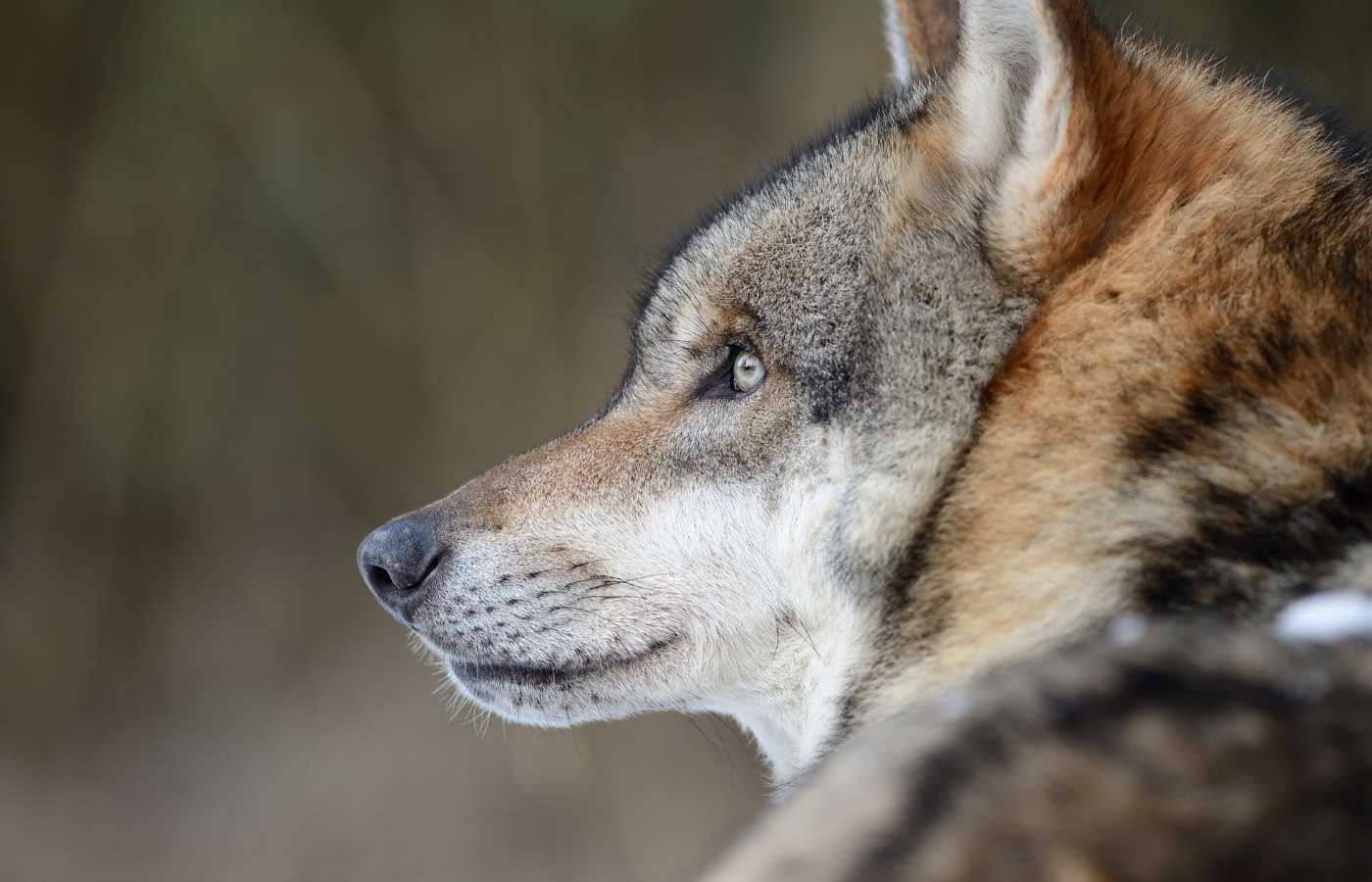
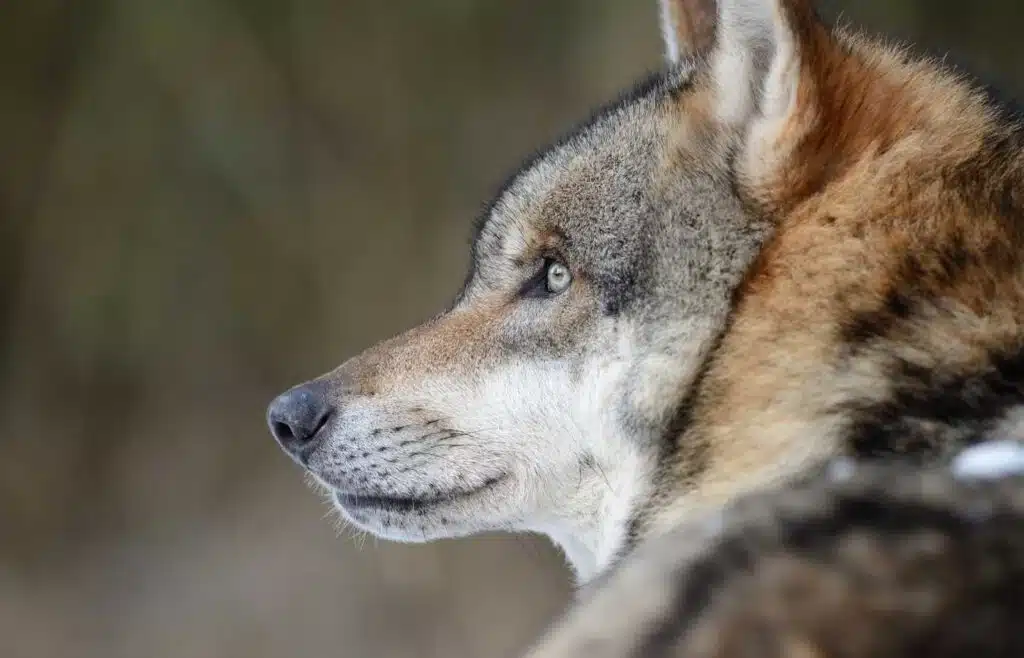
- Adult wolves look like large dogs, but with longer, stronger jaws and bigger heads.
- The scientific name for the grey wolf is Canis lupus.
- They are also known as timber wolves, tundra wolves, lobos, and prairie wolves.
Size, Weight & Appearance
How Big Are Grey Wolves?
- Grey wolves can weigh up to 110 lbs — the heaviest wolf species.
- Males typically weigh 80–110 lbs, females 60–80 lbs.
- They stand about 26–32 inches tall.
- Grey wolves can measure up to 6.5 feet from nose to tail.
- Males are usually 5–6.5 ft long; females 4.5–6 ft long.
- Their paws can measure 5 inches long.
Fur & Coat Colors
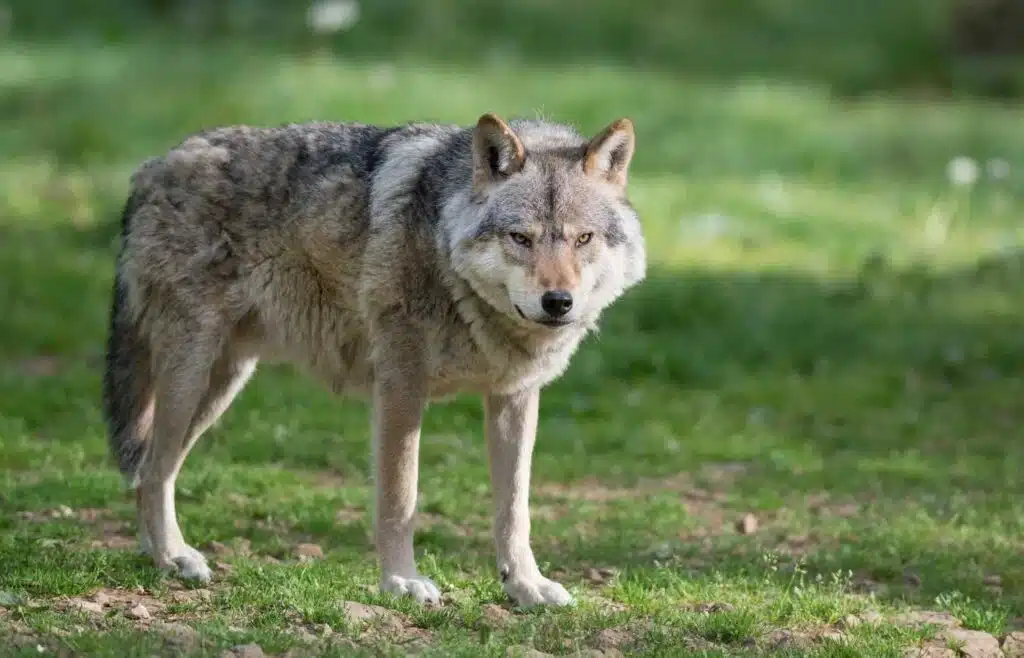
- Grey wolves can be grey, brown, black, white, or tan.
- Their fur becomes darker in winter.
- Almost all grey wolves have thick fur and bushy tails to help them survive cold climates.
Super Senses
- Wolves can reach speeds of 40 mph during a chase.
- They can hear sounds up to 5 miles away.
- Their sense of smell is about 100 times stronger than a human’s.
- They have 200 million olfactory cells in their noses!
Where Grey Wolves Live
- Grey wolves can live in many habitats: arctic tundra, forests, prairies, and deserts.
- In the United States, they live in Alaska, Idaho, Michigan, Minnesota, Montana, Wisconsin, and Wyoming, along with parts of Canada.
- They are carnivores who eat mostly meat.
💡Kids who love learning about wildlife might also enjoy our roundup of Outdoor Things To Do in Wisconsin.
What Wolves Eat
- Grey wolves hunt large animals like deer, moose, sheep, goats, caribou, elk, bison, and muskox, as well as smaller animals like rodents, beavers, fish, and birds.
- Wolves will also eat apples, pears, berries, and melons when they’re available.
- Wolves are mostly nocturnal, hunting after dusk and resting at sunrise.
- While bears or mountain lions might overpower a single wolf, they can’t match an organized wolf pack.
- Wolves help stabilize ecosystems by keeping prey populations in balance.
- A wolf may eat 20–30 lbs of meat in one meal.
- They can go up to 14 days without eating.
Wolf Behavior & Pack Life
How Packs Work
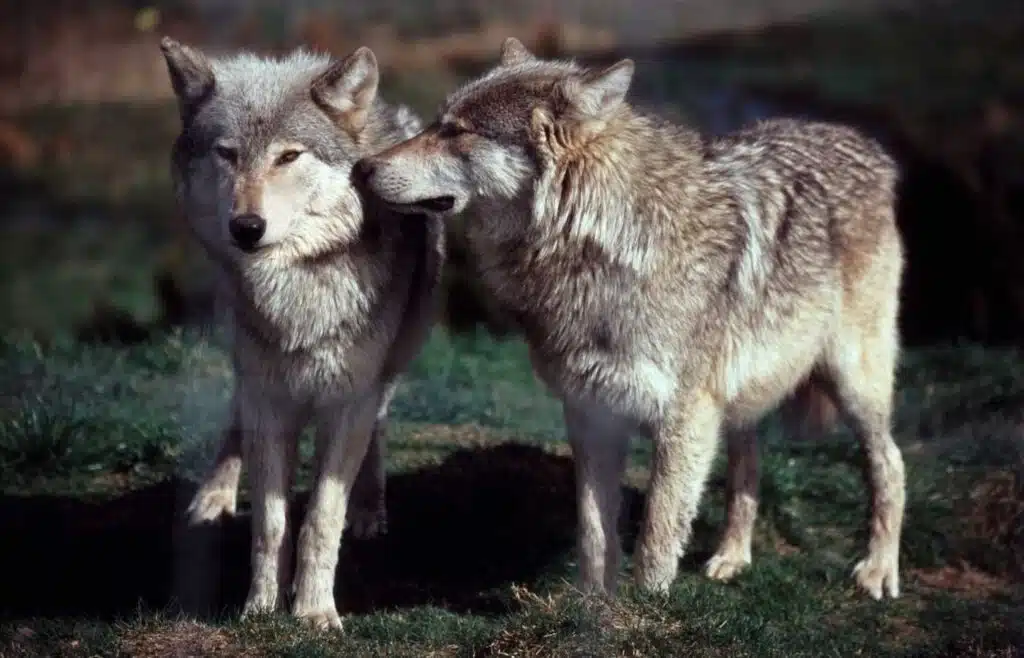
- Grey wolves are very social animals.
- They live and hunt in packs of 6–8 wolves, usually a mom, dad, and their offspring.
- The leaders of the pack are the alpha male and alpha female.
- Once paired, they may stay together for years.
- Alpha pairs often mate for life.
- Breeding season is from late January to March.
Territory & Travel
- Wolves usually hunt within territories ranging from 50 to 1,000 square miles.
- They can travel up to 12 miles in a single day.
Wolf Pups
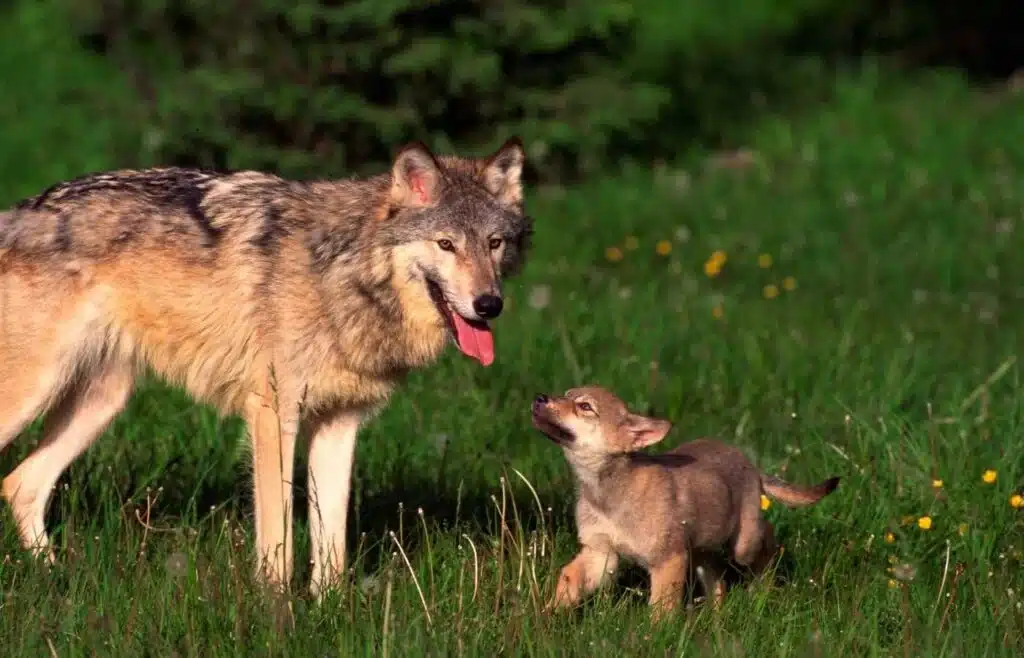
- Wolves have one litter each year, with a gestation period of 9 weeks.
- Pups are born blind and deaf and need care for about 10 months.
- Like all mammals, wolf moms feed their babies with milk.
- Pups are born with blue eyes that turn yellow-gold at 10–16 weeks.
- Unfortunately, only about half of wolf pups reach adulthood.
- Young wolves stay with the pack for at least two years.
- Some leave to start their own packs nearby or far away.
- Wolf pups love to play — leaping, chasing, wrestling, hide-and-seek, and tag.
How Wolves Communicate
- Older siblings help bring food to younger pups.
- Wolves rely on communication skills to survive.
- The howl warns of danger or calls out to another pack.
- A wolf’s howl can be heard 10 miles away.
- Each pack has a unique howl.
- Wolves howl more under a bright, full moon.
- They also whimper, whine, growl, bark, yelp, and snarl.
- Wolves mark territory using urine.
- They also communicate with body language.
- A confident wolf lifts its head and perks its ears.
- A submissive wolf lowers its body and tucks its tail.
- When a wolf wants to play, it prances and lowers its front while wagging its tail.
Are Grey Wolves Endangered?
- Hunting and habitat destruction once caused a steep decline in wolf populations.
- Today, grey wolf populations are stable in most areas and they are not considered endangered.
You can support wolves by learning more through Wolf Haven International, a sanctuary that protects displaced wolves and promotes conservation.
Grey Wolf Books for Kids
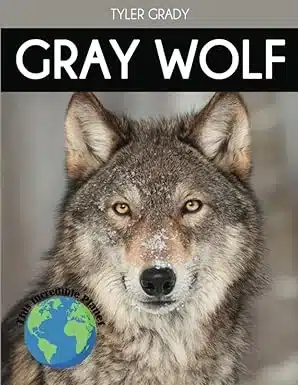
Gray Wolf: Fascinating Animal Facts for Kids (Tyler Grady)
This book gives a simple look at how gray wolves live, hunt, and communicate. It encourages curiosity and helps children appreciate wildlife.
Frequently Asked Questions About Grey Wolves
No. Most populations are now stable and not considered endangered.
Large prey such as deer, elk, sheep, goats, muskox, and moose, plus smaller animals and fruits like berries, apples, and melons.
Wolves usually avoid humans and do not pose a threat when left alone in the wild.
Yes, wolves may prey on coyotes.
In landscapes ranging from tundra to forests, prairies, and deserts. In the U.S., they live in Alaska, Idaho, Michigan, Minnesota, Montana, Wisconsin, and Wyoming.
Related Animal Facts
Kids who love wolves may also enjoy:
- Monkey Facts for Kids
- Emperor Penguin Facts for Kids
- White Tiger Facts for Kids
- Cheetah Facts for Kids
- Elephant Facts for Kids
- Shark Facts for Kids
And don’t forget to explore our full collection of Fun Animal Facts for Kids, from ocean animals to jungle creatures.

Calie Herbst, Editor-in-Chief of Milwaukee With Kids, has spent over a decade combining her experiences as a parent of three to create a hub for Milwaukee’s family adventures.
Her decade-long teaching career in Milwaukee Public Schools and academic background, including a Master’s in Teaching from Marquette University and dual B.A.s in Sociology and Spanish from the University of Wisconsin – Madison, fuel her passion for inclusive and engaging family content.
Calie is also a recognized voice in local media, contributing to WISN Channel 12 News, WTMJ Wisconsin Morning News, Fox 6’s Real Milwaukee, and B93.3.
Discover more about Calie’s journey and editorial approach on her About Page and Editorial Policy Page.