
In this kid-friendly guide, you’ll find 50 fascinating black panther facts about their habitat, hunting skills, cubs, and conservation. Perfect for animal lovers, students, or anyone curious about the wild world of big cats!
Quick & Surprising Panther Facts Kids Love
Before we jump into all 50 black panther facts, here are a few wild highlights that kids always gasp at:
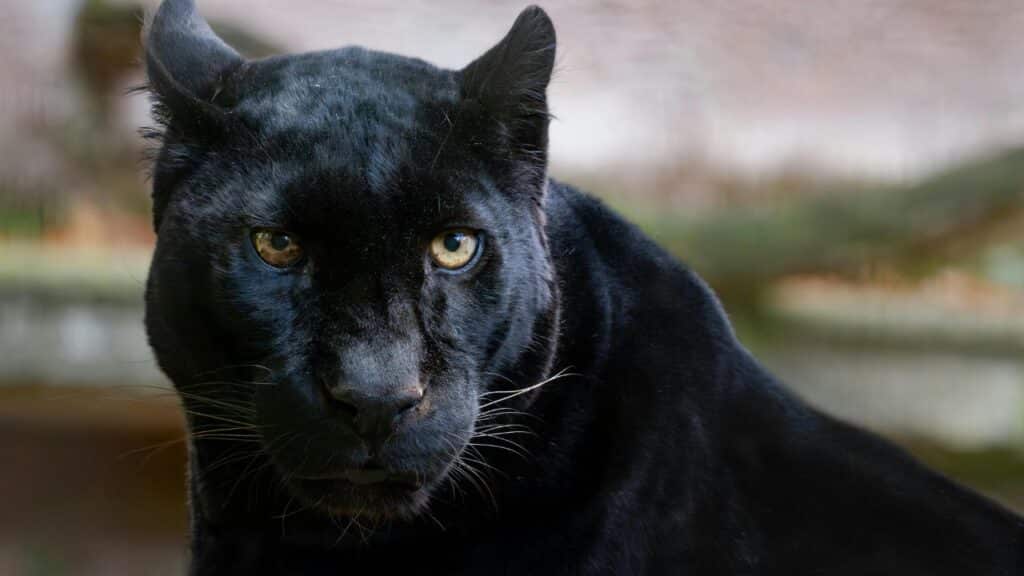
- They aren’t their own species. A “black panther” is actually a leopard or jaguar with a special genetic twist called melanism that turns their fur dark.
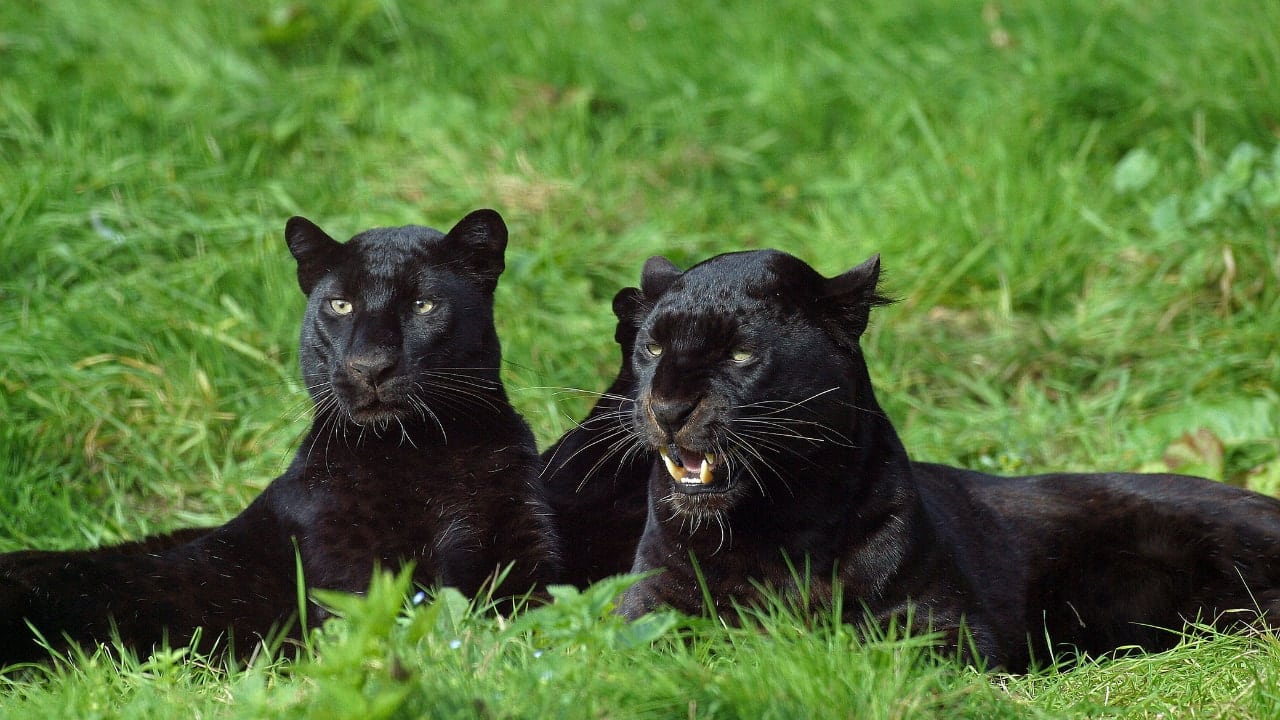
- Their spots are still there! In sunlight, you can see the same rosette spots as any other leopard or jaguar — just hidden under all that dark pigment.
- They can leap as far as a school bus is long. Panthers can jump 20 feet in a single bound and climb trees while carrying heavy prey.
- They’re night-time experts. A reflective layer in their eyes helps them see in almost total darkness — perfect for sneaking up on prey.
- Baby black panthers aren’t black at birth. Cubs are born with lighter fur and faint spots, and their dark coat appears as they grow.
- Only about 1 in 10 leopards is melanistic. That’s why black panthers are so rarely photographed in the wild.
- They’re powerful solo hunters. Panthers live alone, defend their territories fiercely, and rely on stealth over speed.
- Their dark coat is a superpower. It helps them blend into deep forest shadows, giving them a major advantage at night.
- They chuff, purr, growl, and hiss to talk. Cubs even chirp!
- They live all over the world. In Africa and Asia, they’re melanistic leopards; in Central and South America, they’re melanistic jaguars.
What Is a Black Panther?
A black panther is a leopard or jaguar with a rare genetic mutation called melanism, which makes its fur appear black. (Panthera.org)
- “Black panther” isn’t a separate species — it’s a melanistic form of either a leopard (Panthera pardus) or jaguar (Panthera onca).
- The melanism gene causes extra dark pigment, giving the fur its deep color while faint rosette spots remain visible in sunlight. (National Geographic Kids)
- Melanism is the opposite of albinism, which causes a lack of pigment and white fur. (Smithsonian National Zoo)
- In leopards, the trait is recessive, meaning both parents must carry the gene; in jaguars, it’s dominant, so it shows up more often. (Panthera.org)
- About 10–11 % of leopards in the wild are melanistic, making black panthers extremely rare.
- In Asia and Africa, black panthers are melanistic leopards; in Central and South America, they’re melanistic jaguars.
- Scientists think the dark fur helps them blend into dense rainforests, giving them a stealth advantage when hunting.
Size, Speed & Strength of Black Panthers
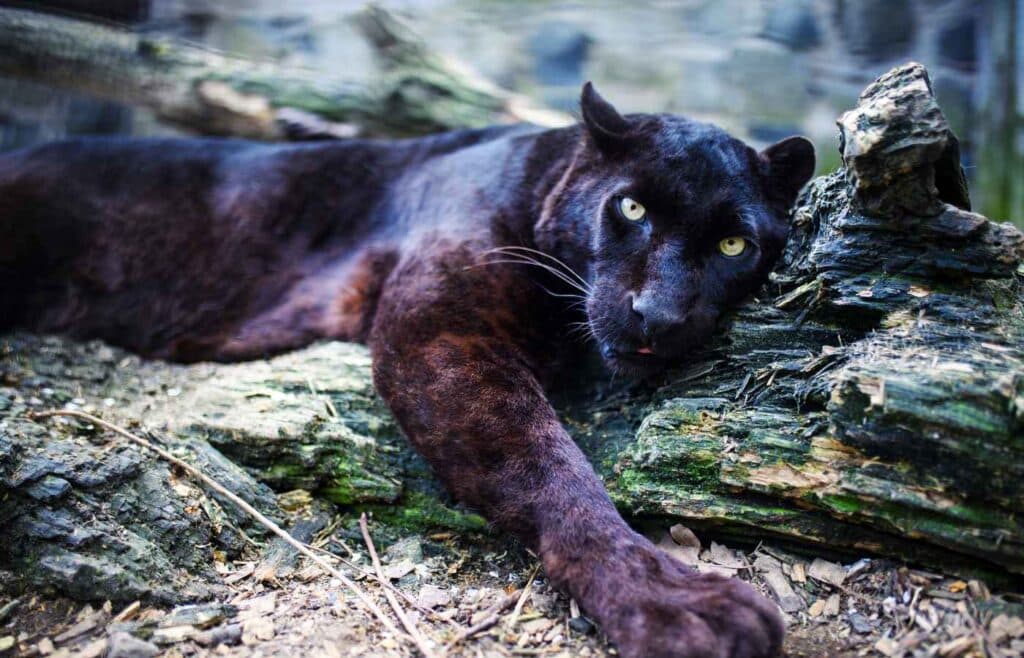
Black panthers are powerful, athletic cats built for strength, speed, and stealth.
Because “black panther” can refer to a leopard (Panthera pardus) or a jaguar (Panthera onca), their size and abilities depend on where they live and which species they belong to.
- Leopard-type black panthers (found in Africa and Asia) usually weigh 70–160 pounds (32–72 kg) and measure 4–6 feet long, not including the tail. Females are smaller and lighter.
(San Diego Zoo) - Jaguar-type black panthers (found in Central and South America) are stockier and heavier. Males can weigh 200–300 pounds (90–135 kg) and grow up to 6 feet long, while females are about two-thirds that size.
(Panthera.org) - They are incredibly fast. Leopards can sprint around 36 mph (58 km/h), while jaguars can reach roughly 30–40 mph (48–64 km/h) in short bursts — perfect for ambushing prey.
(National Geographic) - Leaping legends: Black panthers can jump up to 20 feet (6 m) horizontally and 10 feet (3 m) vertically. Their powerful back legs help them pounce silently and climb trees with ease.
(PBS Nature) - Their long, muscular tails — often 2–3 feet (0.6–0.9 m) — help with balance when running, leaping, or climbing through trees.
- Panthers also use subtle tail movements to communicate — a flick might signal irritation, while a raised tail can show calm or curiosity.
(Smithsonian’s National Zoo) - Strong but stealthy: Compared to lions and tigers, black panthers are smaller, but they’re strong for their size and incredibly agile. Leopards, for example, can carry prey heavier than themselves up into trees to eat safely away from scavengers.
(San Diego Zoo)
Black Panther Appearance & Coat Facts
Black panthers may look completely black, but there’s a lot more going on beneath that dark fur. Their mysterious coats actually reveal one of nature’s most fascinating genetic traits — melanism.
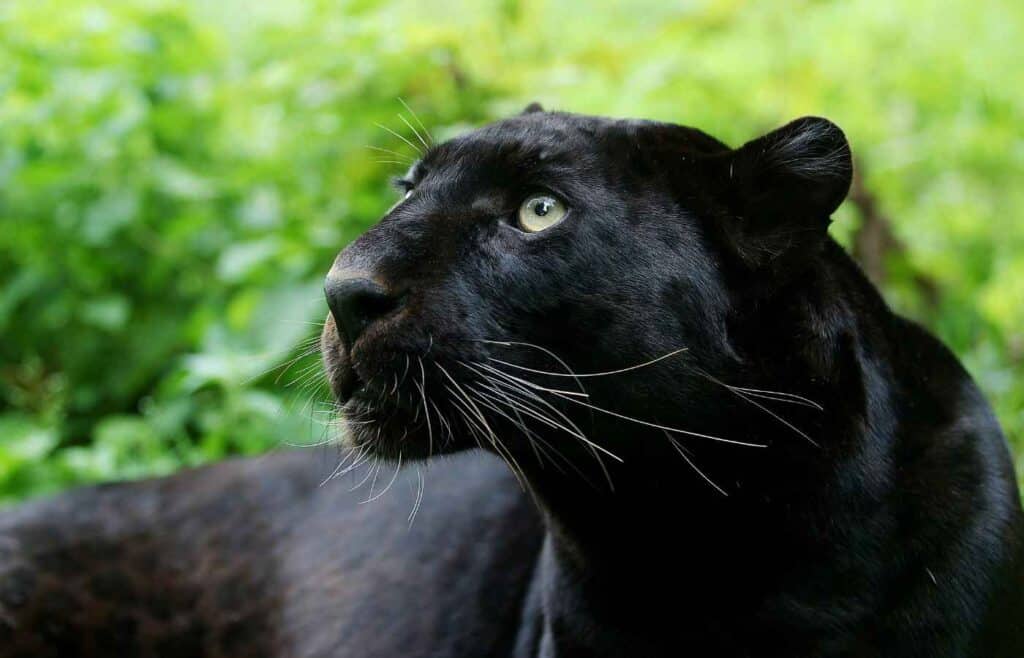
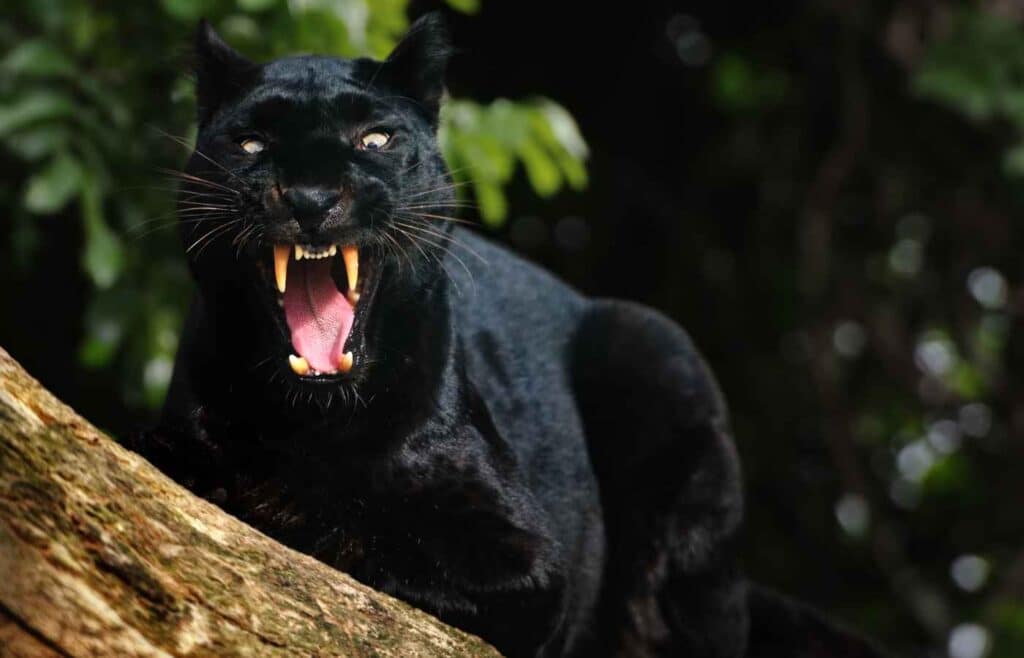
- Despite their name, black panthers aren’t always pure black. In certain light, their coats can appear dark brown or even reddish-brown. (Panthera.org)
- Look closely and you’ll still see their famous spots! Under the right lighting, faint rosettes or spots appear on their fur — a reminder that they’re still leopards or jaguars with unique coloring. (National Geographic Kids)
- The dark coat is caused by a genetic condition called melanism, which increases dark pigment (melanin) in their fur. It’s the opposite of albinism, which causes a lack of pigment and results in white fur. (Smithsonian’s National Zoo)
- In leopards, melanism is recessive — both parents must carry the gene for their cubs to be black. In jaguars, the trait is dominant, so even one copy of the gene can produce the dark coat. (Panthera.org)
- This is one reason black panthers are rare in the wild — scientists estimate only about 10–11% of leopards are melanistic. (Panthera.org)
- Melanism isn’t unique to big cats. It appears in many other animals, including wolves, squirrels, and even some penguins. It often helps animals blend into dark or forested environments. (Panthera.org)
- Scientists believe the dark coat provides a camouflage advantage in dense forests, helping black panthers sneak up on prey at night and stay hidden from larger predators.
- Their strong jaws and sharp teeth make them powerful hunters. The upper lip can pull back to reveal their long canine teeth, which deliver a crushing bite. (San Diego Zoo)
- Like other big cats, black panthers have a rough tongue covered in tiny backward-facing barbs called papillae. These help them groom their fur and scrape meat off bones. (Smithsonian Magazine)
How Black Panthers Behave
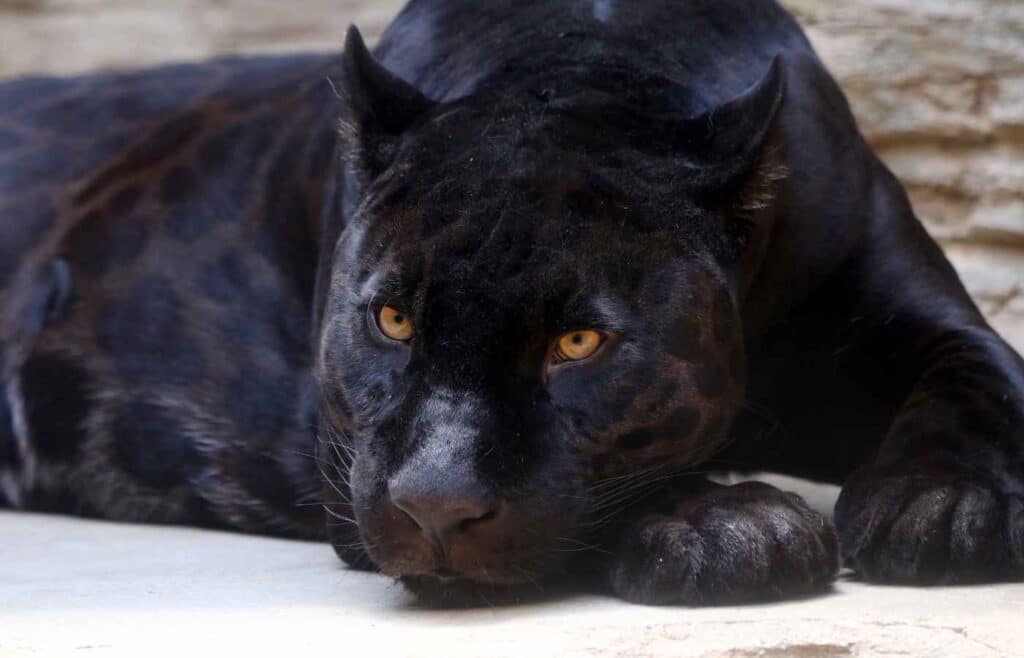
Black panthers are stealthy, solitary hunters who rule their ecosystems with quiet power. Their behaviors are nearly identical to those of their non-melanistic relatives — leopards and jaguars — but their dark coats give them an extra edge at night.
Solitary & Territorial
- Black panthers usually live alone, coming together only during mating season or when mothers are caring for cubs. (San Diego Zoo)
- They are territorial animals, marking their areas with urine, claw scratches, and deep growls to warn rivals to stay away. Males’ territories often overlap with several females’. (Panthera.org)
- During the breeding season, males roar and scent-mark more frequently to attract mates — and may even fight one another for the right to breed. (Smithsonian’s National Zoo)
Nocturnal Hunters
- Black panthers are nocturnal, meaning they’re most active at night. Their dark coats make excellent camouflage when stalking prey after sunset. (National Geographic Kids)
- Like all big cats, they’re ambush predators — they stalk quietly, then use explosive speed and powerful jaws to take down prey.
- They are apex predators, sitting at the very top of their food chain. Their diet includes deer, wild boar, monkeys, birds, and smaller mammals. (Panthera.org)
- Melanistic jaguars and leopards hunt just like their spotted relatives, relying on stealth and strength rather than the element of surprise alone.
Diet & Hunting Skills
- Black panthers are carnivores, which means they eat only meat. Their strong jaws and retractable claws help them kill prey quickly.
- They often drag prey up into trees to eat safely away from scavengers — a behavior especially common in leopards. (San Diego Zoo)
- Excellent swimmers: Jaguars in particular are comfortable in water and have been seen swimming across rivers and lakes up to 6 miles wide in search of food. (Panthera.org)
- Strong climbers: Leopards — and therefore many black panthers — can climb trees to rest, store food, or watch for prey. They use their long tails for balance.
- Some black panthers even make simple tree nests from branches and leaves to rest safely above the ground.
Communication & Play
- Black panthers communicate through growls, hisses, purrs, and chuffing sounds, along with scent-marking. (Smithsonian’s National Zoo)
- Panther cubs are playful — they wrestle, chase, and pounce in practice for hunting as adults.
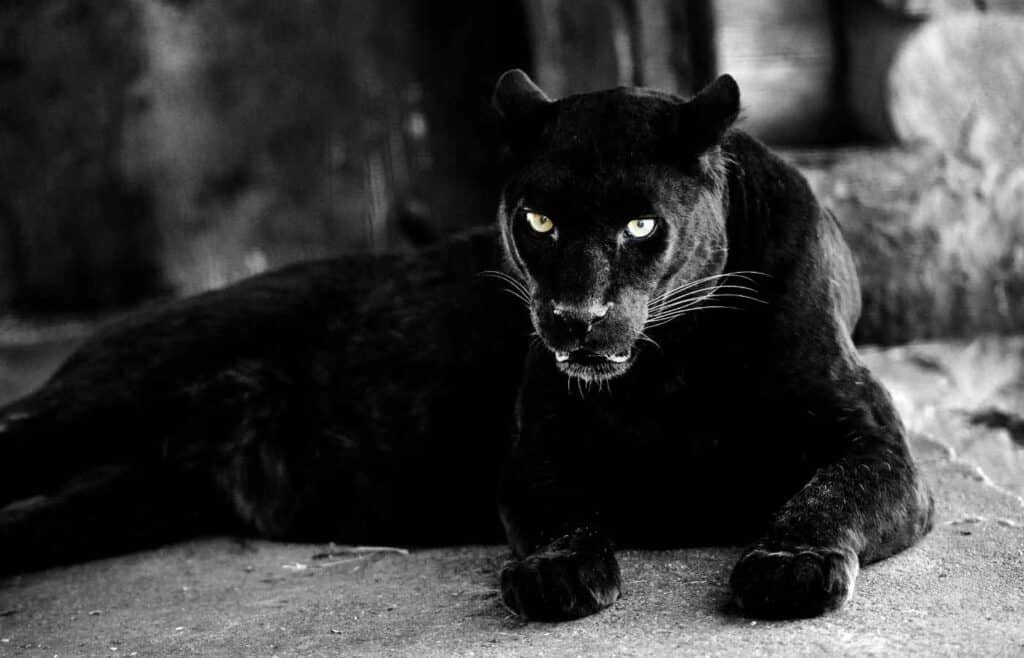
How Black Panthers Use Their Amazing Senses
Black panthers are expert hunters with incredible senses that help them survive in the wild. Their sight, hearing, and touch work together to make them silent and successful predators — especially at night.
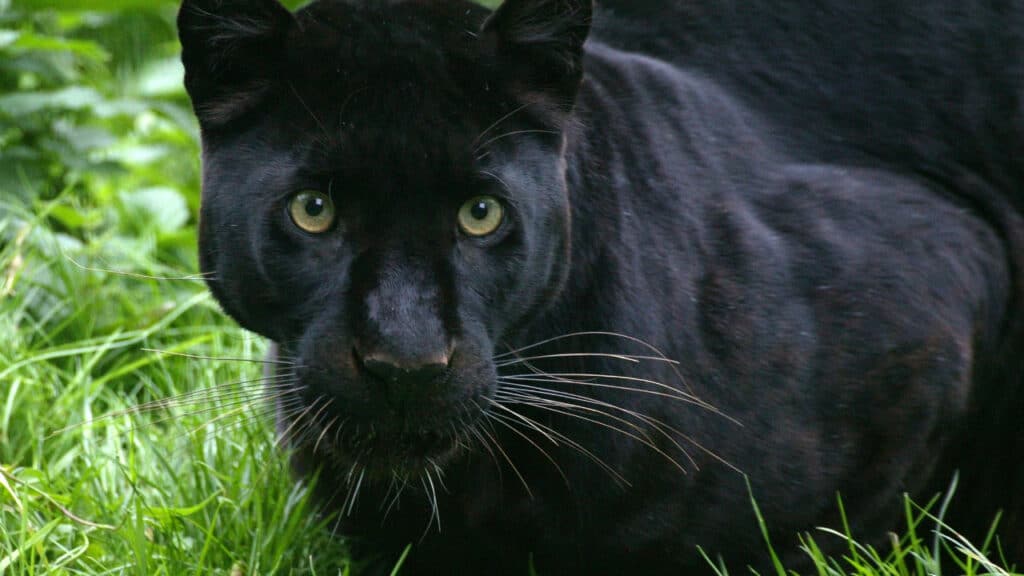
- They can see in the dark! Black panthers have excellent night vision thanks to large pupils and a reflective layer behind their retinas called the tapetum lucidum. This special layer bounces light back through their eyes, allowing them to spot prey even in near-total darkness.
(Smithsonian’s National Zoo) - Their hearing is razor-sharp. They can detect high-pitched sounds and faint rustling that humans would never notice — even the quiet steps of a small animal moving through the grass.
(National Geographic Kids) - They move in total silence. Soft, padded paws act like built-in mufflers, helping black panthers stalk prey without making a sound. The pads also protect their feet from rough terrain and help them balance while climbing.
(Panthera.org) - Their sense of smell helps them find food and mark territory. Black panthers use scent to detect other animals nearby and to identify potential mates or rivals.
(San Diego Zoo) - All these senses working together make black panthers some of the most skilled and secretive hunters in the animal kingdom.
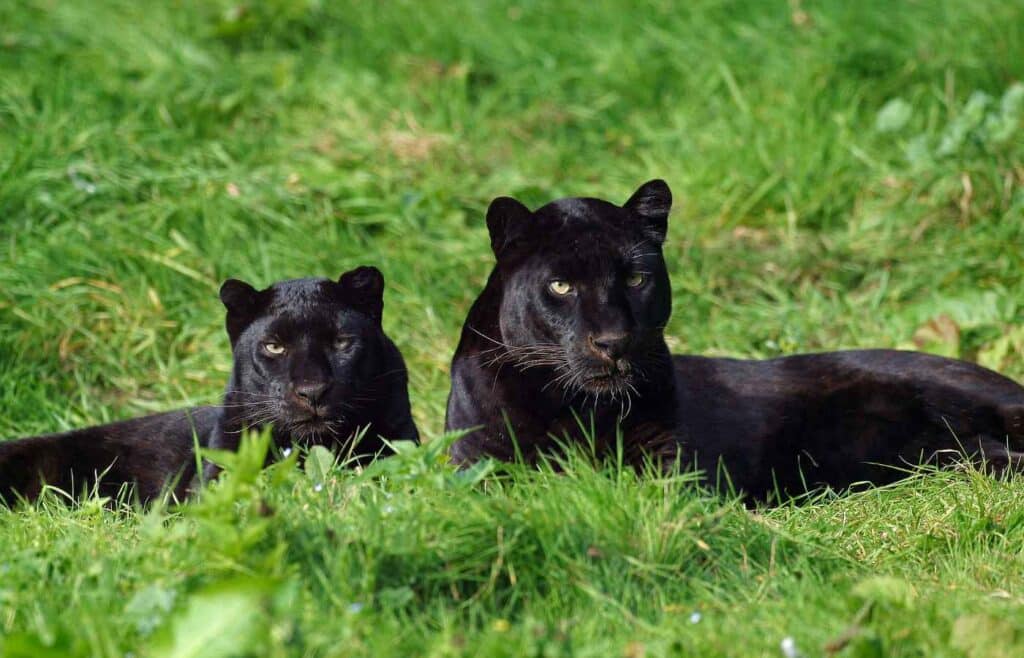
Female Black Panthers
Female black panthers are smaller, quicker, and often more strategic than males. They’re devoted mothers who raise their cubs alone and rely on agility and patience to hunt successfully.
- Female black panthers are smaller and lighter than males. In both leopards and jaguars, females typically weigh 25–40% less than males. Males use their larger size to defend territory and compete for mates, while females rely on speed and stealth.
(Panthera.org) - Mother panthers are famously protective. They will fiercely defend their cubs from any threat, even predators much larger than themselves. (San Diego Zoo)
- They raise their cubs alone. After a gestation period of about 3 months, mothers give birth in a secluded den and care for their cubs without help from males. They nurse them, bring food, and teach them how to stalk and hunt. (Smithsonian’s National Zoo)
- As cubs grow, mothers encourage independence. Around 18–24 months old, young panthers leave the den to find their own territory — a crucial step in survival.
- Female black panthers are incredibly agile hunters. Their smaller bodies and strong coordination make them experts at ambush hunting. They’re often more patient than males, waiting quietly for prey to come within striking range. (National Geographic)
- While black panthers are generally solitary, females sometimes form temporary associations with their nearly grown daughters or overlap home ranges with other females, especially in areas with abundant prey. (Panthera.org)
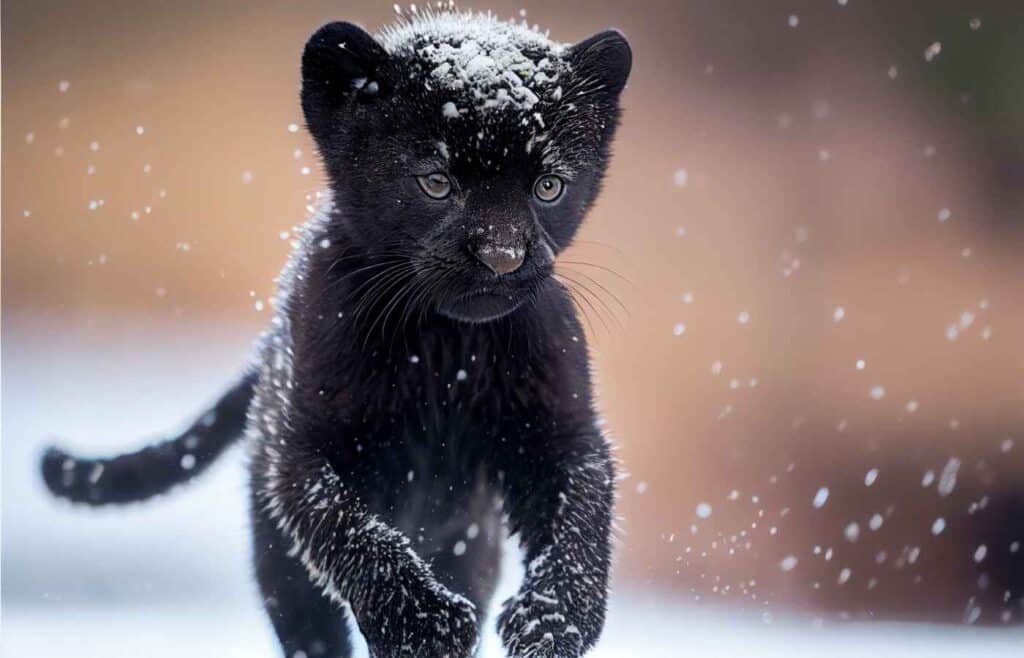
Black Panther Cubs and Family Life
Baby black panthers are born small, spotted, and completely dependent on their mothers. Over the next few months, they grow stronger, braver, and learn everything they need to survive in the wild.
- The gestation period for a black panther is about 90–105 days (around three months). After that, the mother finds a safe, hidden den to give birth.
(San Diego Zoo) - Most mothers give birth to 2–4 cubs at a time, though in rare cases, litters of up to six have been recorded. (Smithsonian’s National Zoo)
- Newborn cubs are tiny — just over a pound each, about the weight of a carton of eggs.
- At birth, cubs have soft fur covered in faint spots or rosettes, which helps camouflage them in tall grass and dappled light. Even melanistic cubs (black panthers) are born with visible markings. (Panthera.org)
- Cubs are born blind and helpless. They rely entirely on their mother for warmth, milk, and protection.
- Their eyes open after 1–2 weeks, but their vision stays blurry for a while. During this stage, they use their sense of smell and touch to recognize their surroundings and their mother.
- By 2 months old, cubs begin to eat solid food, but they continue to nurse for up to 6–8 months while learning to hunt. (San Diego Zoo)
- Playtime is serious practice. Young panthers spend hours wrestling, chasing, and pouncing on each other — building strength and coordination for adulthood. (National Geographic Kids)
- Around 18–24 months old, juvenile panthers leave their mother to find their own territory, beginning life as independent adults. (Panthera.org)
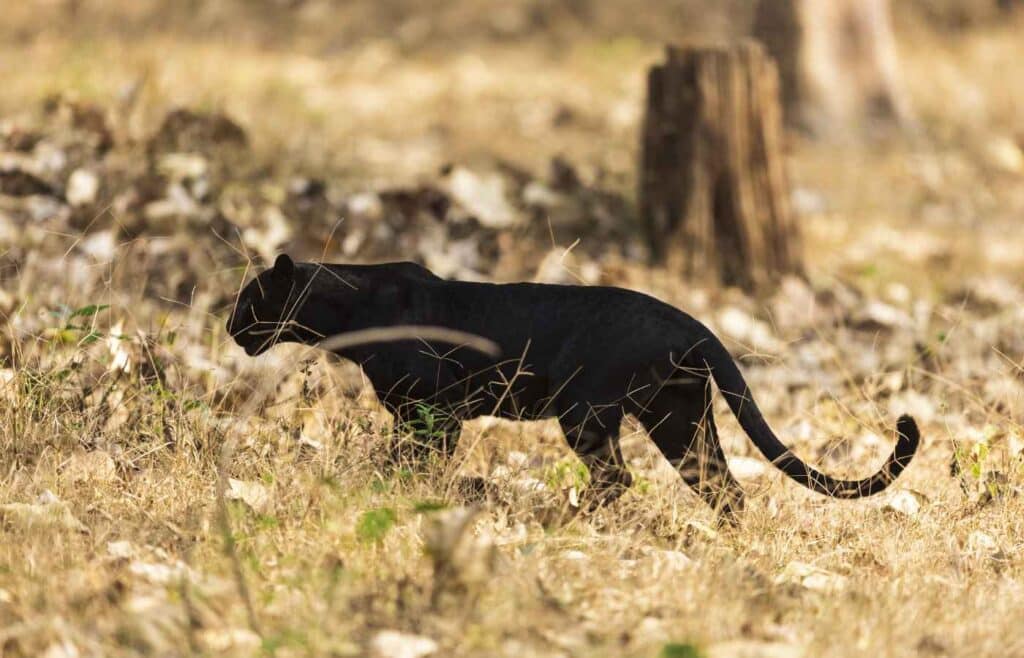
Where Do Black Panthers Live?
Black panthers live in many parts of the world, adapting to almost any habitat where their leopard or jaguar relatives are found. Their dark coats help them blend perfectly into dense forests and shadowy terrain.
- Black panthers are incredibly adaptable. They can live in rainforests, swamps, savannas, and even dry forests or deserts, depending on the region.
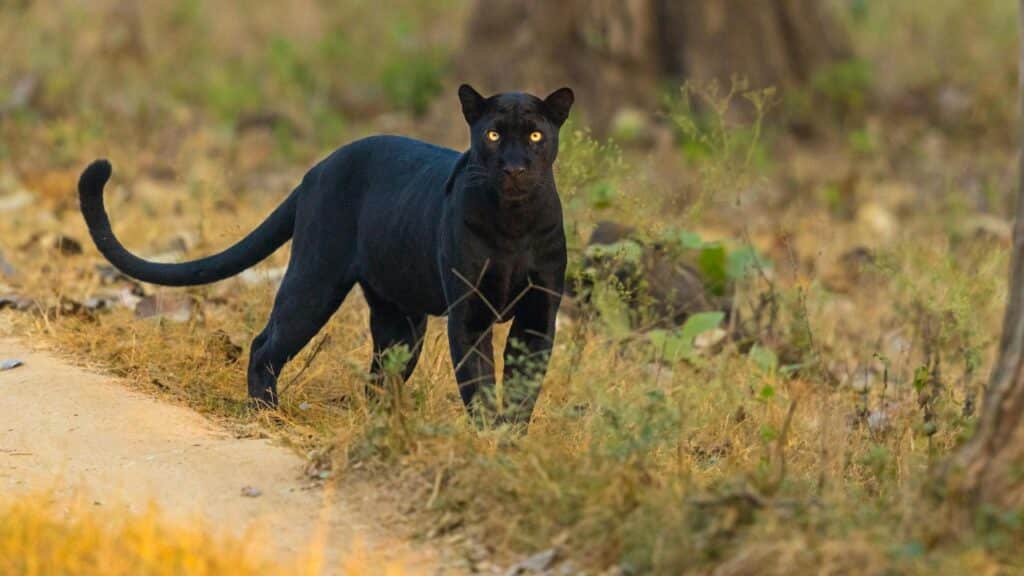
(San Diego Zoo) - In Africa and Asia, black panthers are melanistic leopards (Panthera pardus). They’re most often spotted in the dense tropical forests of India and Sri Lanka, including the famous Kabini Forest in Karnataka, where a few rare black leopards have been photographed.
(BBC Wildlife) - In Central and South America, black panthers are melanistic jaguars (Panthera onca). These cats roam the Amazon Basin, Mexico, Brazil, and parts of Central America, where their dark coats help them disappear in thick rainforest shadows.
(Panthera.org) - Because they live across such wide ranges, black panthers can adapt to many climates — from humid jungles to grassy plains — as long as there’s enough cover for stalking prey.
(National Geographic Kids) - Habitat loss is one of their biggest threats. As forests are cleared for farming, cities, and roads, black panthers lose hunting grounds and are forced into conflict with humans or other predators. Habitat fragmentation also makes it harder for them to find mates and maintain healthy populations.
(World Wildlife Fund)
Florida Panthers
Florida panthers are rare, wild cats that live only in southern Florida — and they’re one of the most endangered mammals in North America. Although their name includes “panther,” they’re actually a special subspecies of the North American cougar (Puma concolor coryi).
- A special kind of big cat:
Florida panthers are a subspecies of the cougar, also called a mountain lion or puma. Their scientific name is Puma concolor coryi.
(U.S. Fish & Wildlife Service) - Only found in Florida:
They live in southern Florida, mainly in and around Everglades National Park, Big Cypress National Preserve, and nearby forests and wetlands.
(National Park Service) - The only breeding population east of the Mississippi:
Florida panthers are the only known breeding population of cougars in the eastern United States, making them especially important for conservation. - What they look like:
Florida panthers have a tawny or light-brown coat, a white underside, and black markings on their ears, muzzle, and tail tip. Unlike true black panthers, they do not have melanism.
(Florida Fish & Wildlife Conservation Commission) - Solitary and territorial:
These cats live alone and defend large territories. They hunt mostly white-tailed deer, wild hogs, raccoons, rabbits, and armadillos.
(National Geographic) - A near-extinction story:
By the 1990s, only about 20–30 panthers remained in the wild due to hunting and habitat loss.
(U.S. Fish & Wildlife Service) - Conservation success:
Thanks to protective laws, habitat restoration, and genetic rescue (introducing Texas cougars to improve diversity), the population has grown to an estimated 120–230 individuals in recent years.
(U.S. Fish & Wildlife Service) - A Florida icon:
The Florida panther is a symbol of Florida’s natural heritage and is protected under both state and federal Endangered Species Acts. You’ll even find it featured on Florida’s state license plate!
(Florida Fish & Wildlife Conservation Commission)
Why Are Black Panthers Endangered?
Black panthers face many of the same threats as the leopards and jaguars they come from — and sadly, many populations are declining. Although not a separate species, melanistic leopards and jaguars are considered part of their species’ overall conservation status.
- Vulnerable on the IUCN Red List:
Both leopards (Panthera pardus) and jaguars (Panthera onca) — the species that produce black panthers — are listed as Vulnerable on the IUCN Red List of Threatened Species. This means their populations are decreasing across much of their range. - Habitat loss and fragmentation:
The biggest threat to black panthers is deforestation. Forests are cleared for farming, mining, and cities, breaking their habitat into small patches. This makes it harder for them to find food, mates, and safe territory.
(World Wildlife Fund) - Poaching and illegal trade:
Black panthers are sometimes killed for their skins and body parts, which are sold illegally for use in traditional medicine or luxury fashion.
(Panthera.org) - Human–wildlife conflict:
As people expand into wild areas, black panthers sometimes attack livestock — which can lead to retaliatory killings by farmers or villagers.
(World Wildlife Fund) - Climate change pressures:
Rising temperatures and shifting weather patterns change the forests and prey availability that black panthers depend on. This can disrupt their hunting and breeding cycles.
(National Geographic) - Inbreeding and genetic isolation:
Because black panthers are already rare, their small, scattered populations are more vulnerable to inbreeding. This reduces genetic diversity and makes them less resilient to disease or environmental change.
(Panthera.org) - Hope through conservation:
There are many programs working to protect these cats, including protected forest reserves, anti-poaching patrols, reforestation projects, and community education programs that reduce human–wildlife conflict.
(Panthera.org) - A symbol of strength and courage:
In many cultures, black panthers represent power, protection, and bravery. By protecting them, we’re also preserving an important part of nature and human storytelling.
How Kids Can Help Protect Black Panthers
Every person — even kids — can make a difference in protecting black panthers and the wild places they call home. By learning, sharing, and taking small daily actions, you can help these incredible cats survive for generations to come.
1. Learn All You Can
The first step to protecting black panthers is understanding them. Read books, watch nature documentaries, or explore trusted websites like Panthera.org and WWF. The more you know, the more you can help others learn, too!
2. Support Conservation Groups
Organizations such as Panthera, the World Wildlife Fund (WWF), and the Wildlife Conservation Society (WCS)work to protect big cats and their habitats. You can:
- Donate birthday money or fundraiser proceeds.
- “Adopt” a leopard or jaguar symbolically through a wildlife organization.
- Share their missions with your friends or classmates.
3. Spread Awareness
Tell your friends, teachers, and family what you’ve learned. You could:
- Make a poster or slideshow about black panthers.
- Write a letter to a local representative about wildlife protection.
- Share a fun fact during school announcements or in your community newsletter.
Even small conversations can inspire others to care.
4. Be Planet-Friendly Every Day
Climate change and deforestation threaten black panther habitats, but small choices at home help:
- Turn off lights when you leave a room.
- Walk, bike, or carpool instead of driving whenever possible.
- Recycle paper and plastic to reduce waste.
- Eat more plant-based meals to help lower your carbon footprint.
5. Be a Responsible Visitor
If you ever travel to areas where black panthers live — such as India, Africa, or Central America — remember to:
- Stay on marked trails and never litter.
- Keep your distance from wildlife.
- Support eco-friendly lodges and local guides who respect animals and their habitats.
Every Action Counts
Protecting black panthers starts with caring. Whether you donate, learn, or simply talk about these animals, every small step adds up. Together, we can help make sure black panthers — and the forests they depend on — thrive for years to come.
Conclusion: Why Black Panthers Matter
Black panthers remind us how extraordinary nature can be. With their sleek black coats, quiet power, and incredible adaptability, these cats capture our imagination — and remind us how important it is to protect the wild places they call home.
Even though “black panther” isn’t its own species, melanistic leopards and jaguars play a vital role in keeping their ecosystems balanced. They control prey populations, shape forest health, and inspire conservation efforts around the world.
Sadly, these animals still face serious threats from habitat loss, poaching, and climate change — but there’s hope. Thanks to growing conservation programs, reforestation efforts, and education, more people are stepping up to protect them.
Whether you’re a student, teacher, or parent, learning about black panthers is a powerful first step. Every bit of awareness and care helps ensure these mysterious big cats continue to roam the rainforests, savannas, and jungles of our planet for generations to come.
The more we learn, the more we care — and the more we care, the more we protect.
More Animal Facts For Kids
- White Tiger Facts for Kids
- Tiger Facts For Kids
- 50 Mind-Blowing Monkey Facts Your Kids Will Love
- Emperor Penguin Facts for Kids
- Cheetah Facts for Kids
- Grey Wolf Facts for Kids

Calie Herbst, Editor-in-Chief of Milwaukee With Kids, has spent over a decade combining her experiences as a parent of three to create a hub for Milwaukee’s family adventures.
Her decade-long teaching career in Milwaukee Public Schools and academic background, including a Master’s in Teaching from Marquette University and dual B.A.s in Sociology and Spanish from the University of Wisconsin – Madison, fuel her passion for inclusive and engaging family content.
Calie is also a recognized voice in local media, contributing to WISN Channel 12 News, WTMJ Wisconsin Morning News, Fox 6’s Real Milwaukee, and B93.3.
Discover more about Calie’s journey and editorial approach on her About Page and Editorial Policy Page.