Looking for fun, hands-on science experiments for 4th graders? You’re in the right place.
This guide brings together 50 engaging 4th grade science experiments that are simple to set up, age-appropriate, and designed to actually hold kids’ attention. Whether you’re helping with a science fair project, planning a last-minute experiment, or just looking for something educational to do at home, these activities make science approachable and fun.
Most of the experiments use common household items—think food coloring, dish soap, baking soda, and vinegar—and many can be completed in about 30 minutes or less. Kids will explore key concepts like chemical reactions, forces and motion, density, and the scientific method through hands-on testing and observation.
All of the projects below are appropriate for 4th grade. Any experiments that require adult supervision are clearly noted so parents and teachers can choose with confidence.
💡 Looking for even more at-home ideas? Start with our Easy Science Experiments for Kids roundup, or browse our Cold Weather Science Experiments for Kids when you’re stuck inside.
Quick Picks: 4th Grade Science Projects
- Best science fair project: Elephant Toothpaste
- Best last-minute project: Pepper & Soap Surface Tension
- Best hands-on experiment: Homemade Lava Lamp
- Best no-mess project: Rainbow Celery
- Best WOW factor: Skittle Heart
Last-Minute 4th Grade Science Experiments
(5–10 minutes prep, minimal materials)
Pepper & Soap (Surface Tension)
What you need: black pepper, water, dish soap, plate
Prep time: 2 minutes
Mess level: Low
Adult help: No
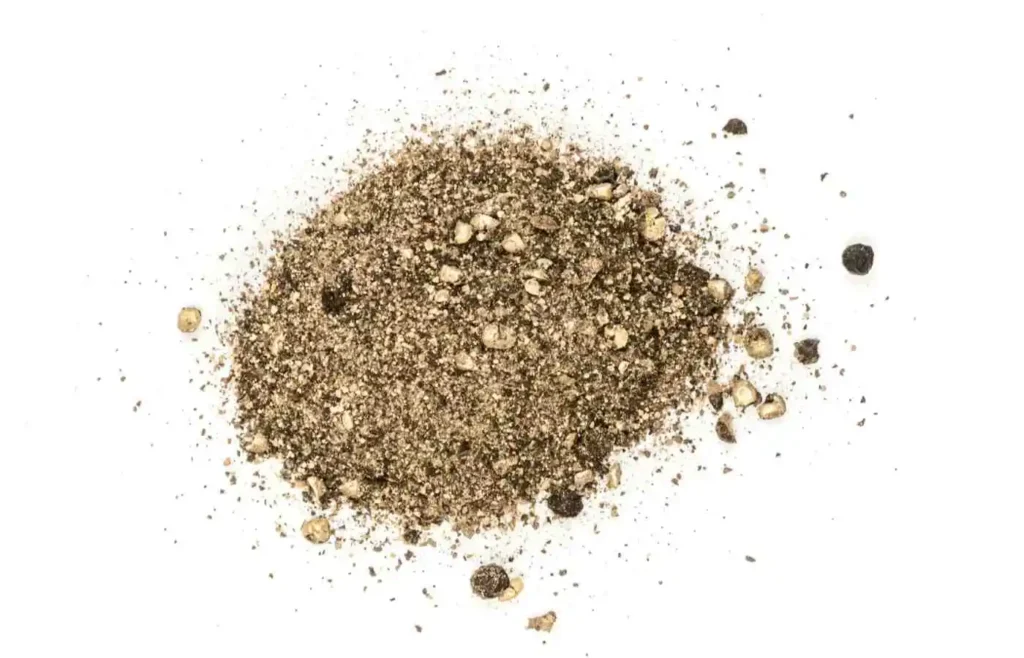
Sprinkle pepper over water, then touch the surface with a soapy finger and watch the pepper scatter instantly. This quick experiment helps kids see surface tension break in real time and makes an abstract concept easy to understand.
💡Want to see this experiment broken down step by step? Our Pepper & Soap Science Experiment guide walks through it with photos and simple explanations.
Dancing Raisins
What you need: clear soda, raisins, glass
Prep time: 2 minutes
Mess level: Low
Adult help: No
Drop raisins into soda and watch them rise and fall as bubbles attach and release. Kids learn how carbon dioxide gas affects buoyancy while observing repeated motion.
💡Want to extend this experiment or explain the science in kid-friendly terms? Our Dancing Raisins Science Experiment breaks it down.
Shiny Pennies
What you need: dirty pennies, vinegar, dish soap, cups
Prep time: 5 minutes
Mess level: Low
Adult help: No
Test which liquid cleans copper pennies best and compare results. This experiment introduces chemical reactions and oxidation using everyday materials.
💡Our Shiny Pennies Science Experiment explains what’s happening to the copper and why different liquids work.
Static Electricity Hair
What you need: balloon, cloth
Prep time: 1 minute
Mess level: None
Adult help: No
Rub a balloon with cloth and hold it near hair to watch strands lift and stick. This is a simple way to demonstrate static electricity and electric charge.
💡To try more static electricity tests, check out our Static Electricity Science Experiment for kids.
Magical Balloon
What you need: balloon, tape, needle
Prep time: 3 minutes
Mess level: Low
Adult help: Yes
Push a needle through taped sections of a balloon without popping it. This experiment shows how tension and pressure affect materials.
💡Our Magic Balloon Science Trick explains how pressure and tension keep the balloon from popping.
Dry Erase Magic
What you need: dry erase marker, glass plate, water
Prep time: 2 minutes
Mess level: Low
Adult help: No
Draw a picture on glass plate or paper towel, add water, and watch it lift and float. Kids explore solubility and adhesion while watching their drawing come to life.
💡Our Dry Erase Marker Science Trick explains why the drawing floats and how to make it work every time.
Wacky Spoon
What you need: metal spoon
Prep time: 1 minute
Mess level: None
Adult help: No
Look at your reflection in a spoon to see it flip upside down. This quick demo introduces reflection and curved surfaces.
Water Glass Trick (Defy Gravity)
What you need: cup, water, index card
Prep time: 2 minutes
Mess level: Medium
Adult help: Recommended
Flip a water-filled cup upside down and remove your hand. Air pressure keeps the water in place, helping kids understand forces acting in opposite directions.
Invisible Ink
What you need: lemon juice, cotton swab, paper, lamp
Prep time: 5 minutes
Mess level: Low
Adult help: Yes
Write secret messages with lemon juice and reveal them using heat. This experiment shows how heat causes chemical changes.
💡For detailed instructions and tips for safely revealing secret messages, see our full Invisible Ink with Lemon Juiceexperiment.
Floating Eggs
What you need: eggs, water, salt, glasses
Prep time: 3 minutes
Mess level: Low
Adult help: No
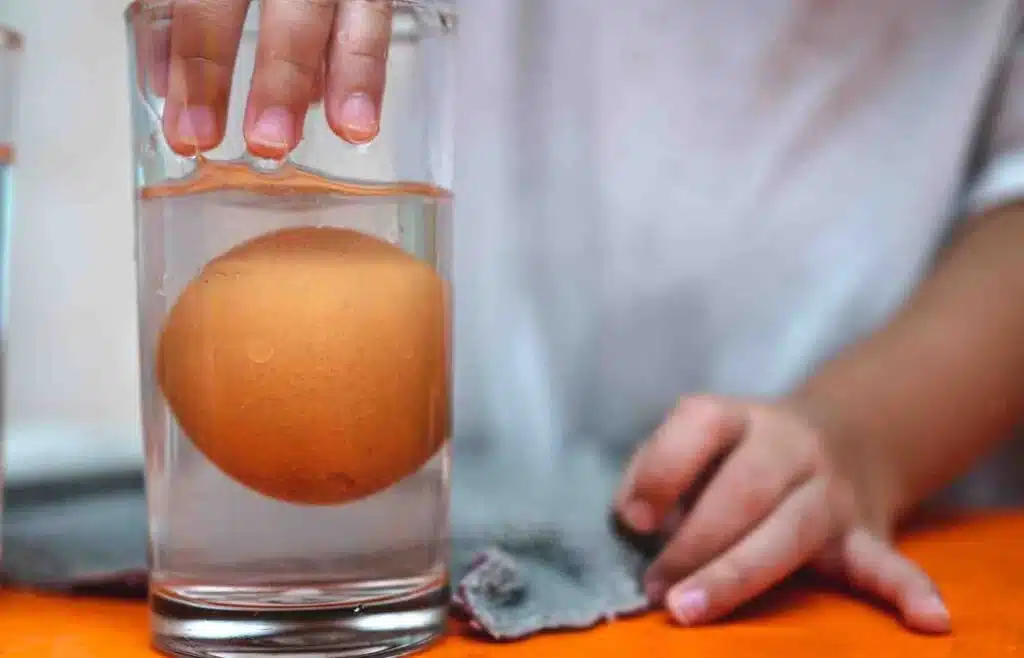
Compare eggs in fresh water and salt water to see which floats. Kids learn how density affects buoyancy.
Orange Fizz
What you need: orange slices, baking soda
Prep time: 2 minutes
Mess level: Low
Adult help: Yes
Dip oranges in baking soda and experience a fizzy reaction. This tasty experiment demonstrates acids and bases.
💡Want to turn this into a true kitchen chemistry lesson? See our Orange Fizz Science Experiment for tips and variations.
Magic Milk
What you need: milk, food coloring, dish soap, cotton swab
Prep time: 3 minutes
Mess level: Medium
Adult help: No
Add soap to colored milk and watch swirling patterns form. Kids observe how fats react with soap molecules.
Exploding Soap
What you need: Ivory soap, microwave-safe bowl, microwave
Prep time: 2 minutes
Mess level: Medium
Adult help: Yes
Heat soap in the microwave and watch it rapidly expand. This experiment shows how air trapped inside solids expands when heated.
💡Safety tips, cleanup advice, and the science behind the expansion are all covered in our Exploding Soap Experiment post.
Flying Ping Pong
What you need: ping pong ball, hair dryer
Prep time: 1 minute
Mess level: None
Adult help: Yes
Use moving air to keep a ping pong ball floating. Kids explore air pressure, force, and balance.
Disappearing Reflection
What you need: aluminum foil
Prep time: 2 minutes
Mess level: Low
Adult help: No
Crumple and flatten foil to see how surface texture affects reflection. This introduces light scattering.
Rubber Band Guitar
What you need: paper or plastic cup, rubber bands
Prep time: 3 minutes
Mess level: None
Adult help: No
Stretch rubber bands over a cup and pluck them to explore vibration and sound.
4th Grade Science Experiments Using Household Items
(No specialty supplies or shopping required)
If you’re hoping to avoid a last-minute trip to the store, you’re in the right place. All of the science experiments below can be done using common household items you likely already have at home.
Many of these experiments are also great last-minute options and are explained in detail above or later in the post, including:
Pepper & Soap, Dancing Raisins, Shiny Pennies, Static Electricity Hair, Jumping Pepper, Magic Milk, Invisible Ink, Floating Eggs, Orange Fizz, Dry Erase Magic, Exploding Soap, Flying Ping Pong, Magical Balloon, Wacky Spoon, Disappearing Reflection, Water Cycle in a Bag, and Rubber Band Guitar.
Below are additional household-item experiments with full instructions.
Lava Lamp
What you need: clear bottle or jar, water, vegetable oil, food coloring, fizzy tablet (like Alka-Seltzer)
Prep time: 5 minutes
Mess level: Low
Adult help: No
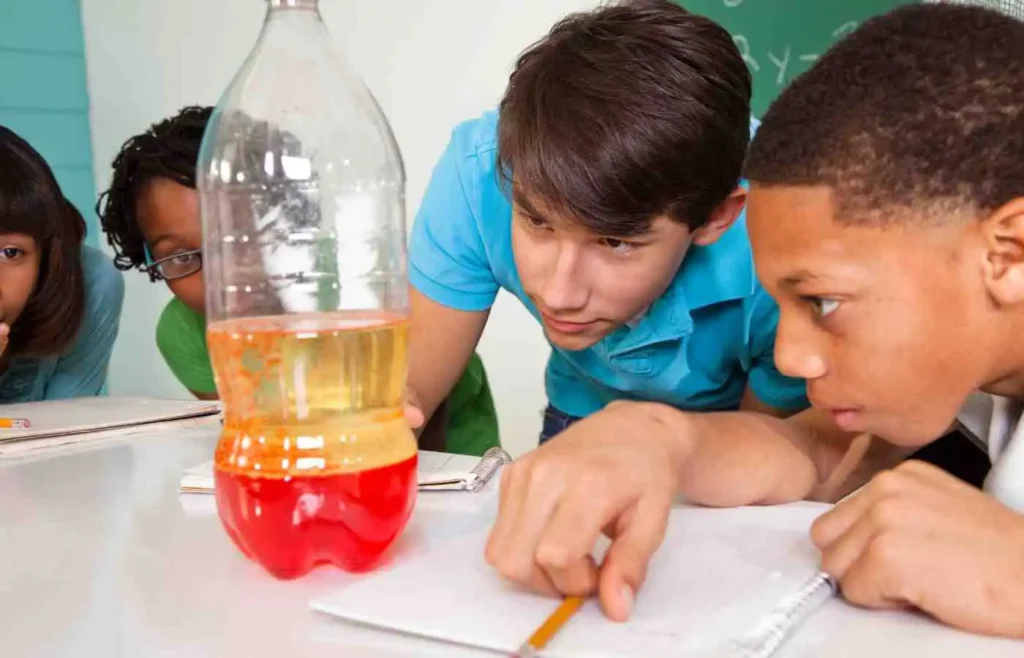
Fill the bottle about one-quarter full with water, then pour in oil until nearly full. Add a few drops of food coloring and drop in part of a fizzy tablet. Watch colorful bubbles rise and fall. This experiment helps kids understand density and why oil and water don’t mix, while the tablet adds a fun chemical reaction.
💡Want clearer bubbles and longer-lasting motion? Our Homemade Lava Lamp guide walks through it step by step.
Rainbow Celery (Capillary Action)
What you need: celery stalks, glasses of water, food coloring
Prep time: 5 minutes (plus waiting time)
Mess level: Low
Adult help: No
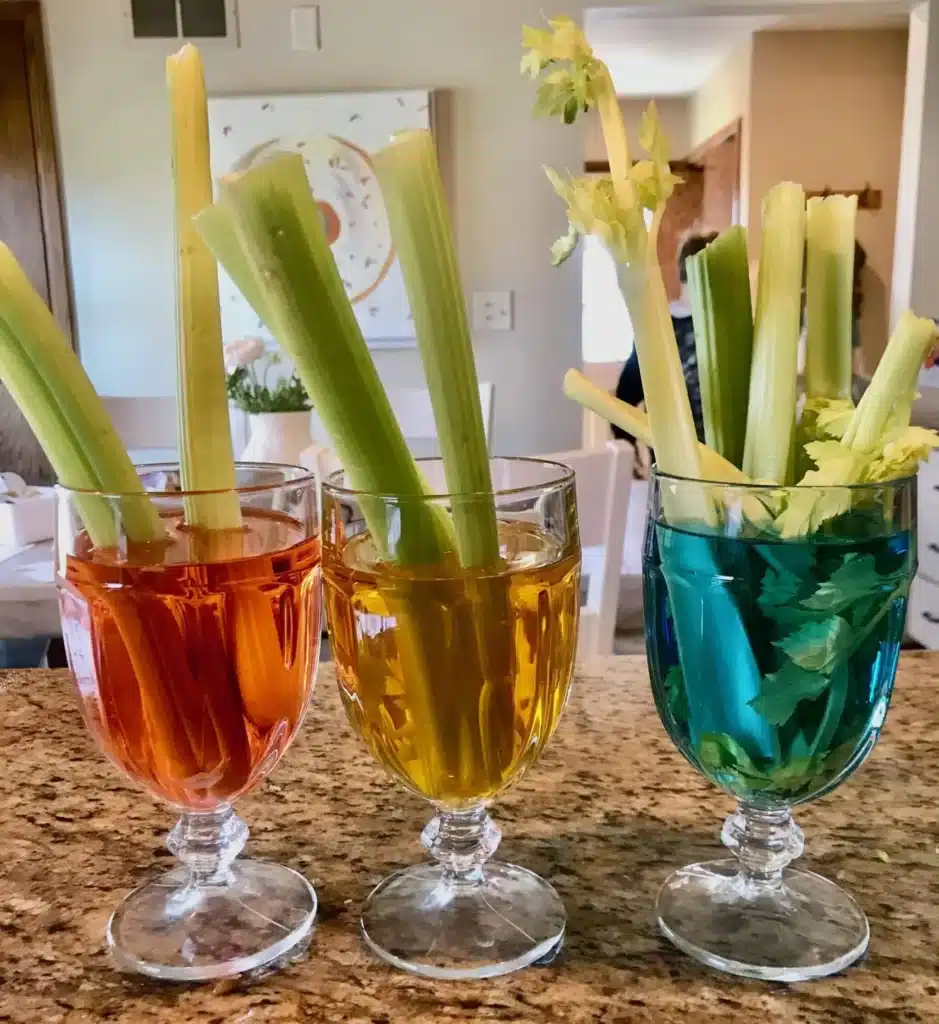
Fill glasses with water and add different colors of food coloring. Place a celery stalk in each glass and leave it for several hours or overnight. The leaves will slowly change color. Kids learn how plants move water through tiny tubes in their stems using capillary action.
💡For photos and a clear explanation of capillary action, visit our Rainbow Celery Science Experiment guide.
Oil & Water (Mixing Impossible)
What you need: clear glass, water, vegetable oil, food coloring
Prep time: 3 minutes
Mess level: Low
Adult help: No
Pour equal parts oil and water into a glass, then add a drop of food coloring. Watch how the liquids separate and how the color behaves. This experiment introduces density and immiscible liquids in a very visual way.
💡For more ways to test liquids that don’t mix, see our Oil & Water Science Experiment post.
Baking Soda & Vinegar Color Experiment
What you need: baking soda, vinegar, food coloring, tray or baking sheet
Prep time: 5 minutes
Mess level: Medium
Adult help: No
Cover a tray with baking soda. Mix food coloring into vinegar, then use droppers or spoons to drip the colored vinegar onto the baking soda. Watch it fizz and spread. Kids explore acid–base reactions while also mixing colors and experimenting freely.
💡For color-mixing ideas and setup tips, visit our full Baking Soda & Vinegar Color Experiment guide.
Mini Volcano
What you need: small cup, baking soda, vinegar, dish soap, food coloring
Prep time: 5 minutes
Mess level: Medium
Adult help: No
Add baking soda, a squirt of dish soap, and food coloring to a cup. Pour in vinegar and watch the “lava” erupt. This classic experiment shows how chemical reactions create gas, causing bubbling and overflow.
💡If you want a slightly bigger, messier version with variations to try, check out our Mini Volcano Science Experiment guide.
Mystery Smell
What you need: small containers, household items with smells, blindfold
Prep time: 10 minutes
Mess level: None
Adult help: Yes
Place different scented items in containers. Blindfold your child and have them smell each one, writing down guesses before revealing the answers.
This activity builds observation skills and shows how scientists use their senses to collect data.
Mystery Object
What you need: bag or box, small household objects, blindfold
Prep time: 5 minutes
Mess level: None
Adult help: Yes
Hide objects in a bag and have kids guess what they are using only their sense of touch.
This experiment encourages careful sensory observation and descriptive thinking.
Paper Airplanes
What you need: paper
Prep time: 3 minutes
Mess level: None
Adult help: No
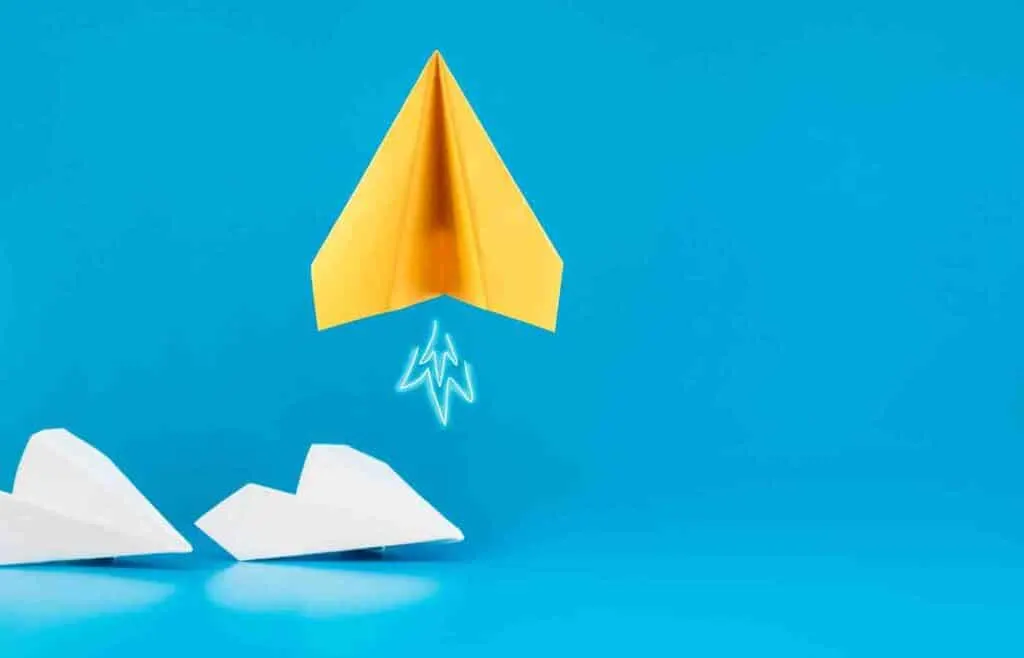
Fold different airplane designs and test how far or smoothly they fly. Try changing wing shapes or throwing styles.
This simple activity explores aerodynamics, force, and motion.
Paper Cup Tower
What you need: paper cups, cardboard
Prep time: 5 minutes
Mess level: None
Adult help: No
Arrange cups on the floor and place cardboard on top. Carefully stand on it and observe how weight is distributed.
Kids learn about force distribution and structural strength.
Chemistry Science Experiments for 4th Grade
(Chemical reactions, mixtures, and colorful transformations)
These chemistry experiments help fourth graders explore how substances react, mix, and change. Many of these are excellent choices for science fairs, while others are perfect for hands-on learning at home with adult guidance.
Elephant Toothpaste
What you need: plastic bottle, hydrogen peroxide (6%), dry yeast, warm water, dish soap, food coloring, safety goggles
Prep time: 10 minutes
Mess level: Medium
Adult help: Yes
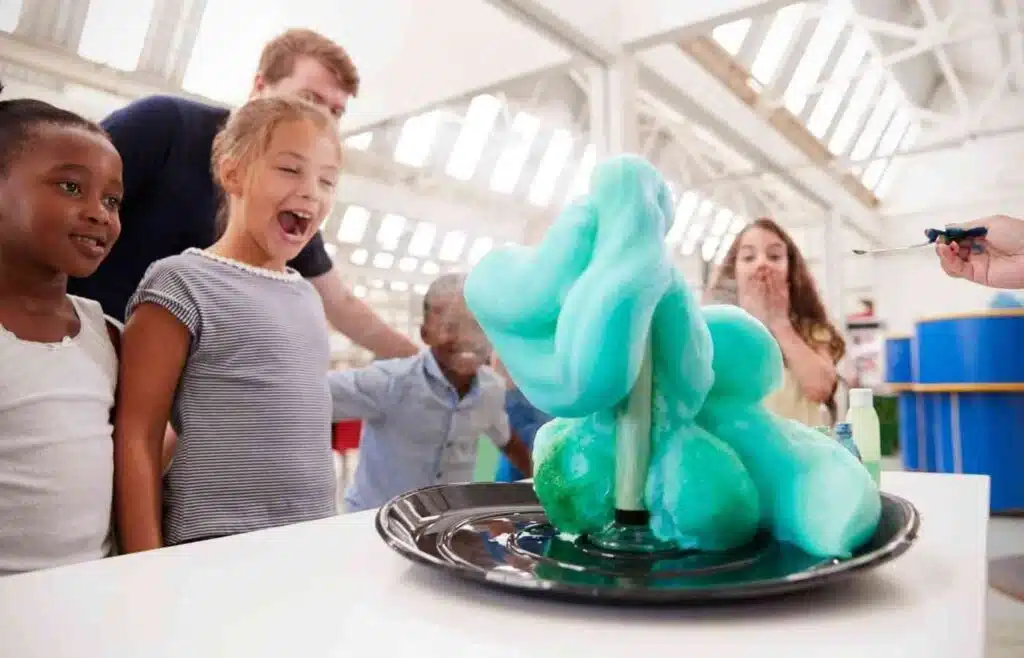
Pour hydrogen peroxide into a bottle, add dish soap and food coloring, then pour in activated yeast. Thick foam rapidly pours out of the bottle. This dramatic reaction shows how a catalyst speeds up a chemical reaction. The yeast breaks hydrogen peroxide into water and oxygen gas, creating bubbles and heat in an exothermic reaction.
💡This reaction has a lot going on – our Elephant Toothpaste Science Experiment guide explains each step and the science behind the foam.
Skittle Heart
What you need: Skittles, shallow dish, water, heart-shaped cookie cutter (optional)
Prep time: 5 minutes
Mess level: Low
Adult help: No
Arrange Skittles in a pattern around the dish, then slowly pour water into the center. Watch as the colors dissolve and spread into beautiful designs. Kids observe how sugar and food coloring dissolve in water and move from areas of high concentration to low concentration.
💡For pattern ideas and science fair tips, see our full Skittle Heart Science Experiment post.
Steel Wool & Vinegar Reaction
What you need: steel wool, vinegar, glass jars, thermometer (optional)
Prep time: 10 minutes
Mess level: Low
Adult help: Yes
Soak steel wool in vinegar, then observe changes in temperature and appearance over time.
This experiment demonstrates oxidation and chemical reactions as iron reacts with oxygen, releasing heat in the process.
Rock Candy Experiment
What you need: sugar, water, saucepan, jar, string or stick
Prep time: 15 minutes (plus waiting time)
Mess level: Low
Adult help: Yes
Dissolve sugar in hot water to make a supersaturated solution, then let it cool and sit for several days. Sugar crystals will slowly grow.
Kids learn about solutions, crystallization, and evaporation while practicing patience and observation.
Sugar Water Rainbows
What you need: sugar, water, food coloring, cups, spoon, straw or dropper
Prep time: 10 minutes
Mess level: Low
Adult help: No
Create sugar-water mixtures with different concentrations, then carefully layer them in a container. This experiment shows how density affects whether liquids sink or float, even when they look similar.
💡To dive deeper into density and layering liquids, visit our Sugar Water Rainbows experiment.
Water Fireworks
What you need: tall glass of water, oil, food coloring, fork
Prep time: 5 minutes
Mess level: Low
Adult help: No
Mix food coloring into oil, then pour the mixture into water. Watch the colors burst and fall.
Kids observe how oil and water don’t mix and how food coloring behaves differently in each liquid.
Corn Syrup Viscosity Experiment
What you need: corn syrup, food coloring, clear containers
Prep time: 5 minutes
Mess level: Low
Adult help: No
Add colored syrup to clear corn syrup and gently swirl. The colors move slowly and hold their shape.
This experiment introduces viscosity, or how thick liquids flow compared to water.
Tie-Dye
What you need: white cotton fabric, rubber bands, fabric dye, gloves
Prep time: 15 minutes (plus drying time)
Mess level: High
Adult help: Yes
Twist, tie, and dye fabric to create colorful designs. Each shirt turns out unique.
Kids explore absorption, chemical bonding, and color mixing, while also creating wearable art.
Physics & Engineering Experiments for 4th Graders
(Forces, motion, gravity, heat, and structural strength)
These hands-on experiments help fourth graders explore how things move, balance, float, fall, and hold weight. Many involve building something simple, testing it, and then making small changes to see what happens—just like real engineers do.
LEGO Boats
What you need: LEGO bricks, tub or bin of water, coins or small weights
Prep time: 10 minutes
Mess level: Low
Adult help: No
Challenge kids to build a boat using LEGO bricks, then place it in water and slowly add coins to see how much weight it can hold before sinking.
This experiment introduces buoyancy, balance, and design, and encourages kids to test, redesign, and improve their structures.
DIY Parachute
What you need: plastic bag or paper towel, string or yarn, paper cup, scissors
Prep time: 10 minutes
Mess level: None
Adult help: Yes
Create a parachute for a small toy using household materials, then drop it from different heights.
Kids learn how air resistance and gravity affect falling objects and how design choices change performance.
Walking on Eggs
What you need: several cartons of eggs, newspaper or drop cloth
Prep time: 5 minutes
Mess level: Medium
Adult help: Yes
Carefully step barefoot across eggs arranged in cartons and observe how they don’t break.
This surprising experiment demonstrates weight distribution and force, showing how pressure spreads across surfaces.
Will It Melt?
What you need: muffin tin or tray, assorted small items, heat source (sunlight or warm area)
Prep time: 5 minutes
Mess level: Low
Adult help: Yes
Place different objects in a tray and predict which will melt when exposed to heat. Check back over time and compare results.
Kids explore heat, temperature, and changes in states of matter, while practicing prediction and observation.
Biology & Earth Science Experiments for 4th Graders
(Plants, animals, ecosystems, and the natural world)
These biology and earth science experiments help fourth graders explore the natural world around them. From observing how plants move water to experimenting with simple ecosystems, these activities bring biology and environmental science to life.
Traveling Rainbows
What you need: clear glasses, paper towels, water, food coloring
Prep time: 10 minutes
Mess level: Low
Adult help: No
Arrange glasses with colored water and connect them using folded paper towels. Over time, the colors will travel through the towel and mix in the empty glasses. This experiment demonstrates capillary action, which is how plants move water and nutrients from the roots to the leaves.
💡For a closer look at why the colors move and mix, visit our full Traveling Rainbows Science Experiment post.
Painted Nature
What you need: natural objects (leaves, sticks, rocks), paints or markers
Prep time: 10 minutes
Mess level: Low
Adult help: No
Go outside to collect natural objects, then bring them inside to paint or draw on. Observe textures and details closely before painting.
Kids explore patterns in nature, observe textures, and connect the art with environmental science.
Bird Feeder Fun
What you need: pipe cleaners, Cheerios or birdseed
Prep time: 5 minutes
Mess level: Low
Adult help: No
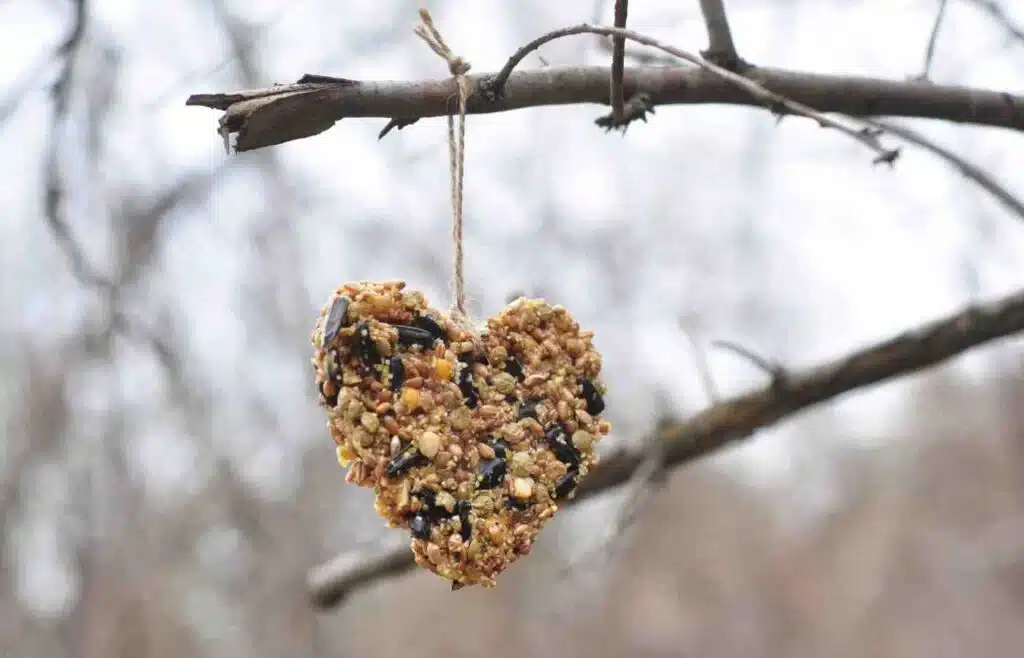
Make simple bird feeders by threading Cheerios onto a pipe cleaner and hanging them outside.
This experiment encourages kids to observe wildlife behavior and experiment with different feeder designs to see which ones attract the most birds.
Rain Gauge
What you need: soda bottle, scissors, tape, ruler
Prep time: 10 minutes
Mess level: Low
Adult help: Yes
Cut the top off a soda bottle, invert it, and tape it back in place to create a funnel. Place the rain gauge outside and measure the rain collected after storms.
Kids learn how to collect data and track weather patterns over time, while also understanding how rain is measured.
Will It Grow?
What you need: small pots, soil, seeds (e.g., beans or flowers), water
Prep time: 10 minutes
Mess level: Medium
Adult help: Yes
Plant seeds in small pots, water them regularly, and watch how they grow. Change one variable (e.g., light, water amount, or type of seed) to see what makes a difference.
This experiment introduces plant growth, the importance of variables, and observation skills, as well as the role of photosynthesis.
Water Cycle in a Bag
What you need: zip-top bag, water, blue food coloring, marker, tape
Prep time: 5 minutes
Mess level: Low
Adult help: No
Draw clouds and a sun on the bag. Add colored water, seal it, and tape it to a sunny window. Over time, you’ll see condensation form on the bag. This experiment demonstrates the water cycle, showing how water evaporates, condenses, and forms clouds.
💡Our Water Cycle in a Bag guide shows exactly what to look for as evaporation and condensation happen.
Painted Rocks
What you need: rocks, paint or markers
Prep time: 10 minutes
Mess level: Medium
Adult help: No
Collect rocks and decorate them with fun designs or nature-inspired artwork.
This activity encourages kids to explore natural materials and express creativity, while also getting outdoors to observe their environment.
More Science Activities For Kids
- 25 Best Science Books For Your 1st Grader: Spark curiosity with these fantastic reads.
- 100 Science Trivia Questions For Kids: Test your knowledge with these fun and challenging questions.
- 10 Best Cold Weather Science Experiments For Kids
- Best Educational Websites Your Child Will Love
Calie Herbst, Editor-in-Chief of Milwaukee With Kids, has spent over a decade combining her experiences as a parent of three to create a hub for Milwaukee’s family adventures.
Her decade-long teaching career in Milwaukee Public Schools and academic background, including a Master’s in Teaching from Marquette University and dual B.A.s in Sociology and Spanish from the University of Wisconsin – Madison, fuel her passion for inclusive and engaging family content.
Calie is also a recognized voice in local media, contributing to WISN Channel 12 News, WTMJ Wisconsin Morning News, Fox 6’s Real Milwaukee, and B93.3.
Discover more about Calie’s journey and editorial approach on her About Page and Editorial Policy Page.