

Save This For Later
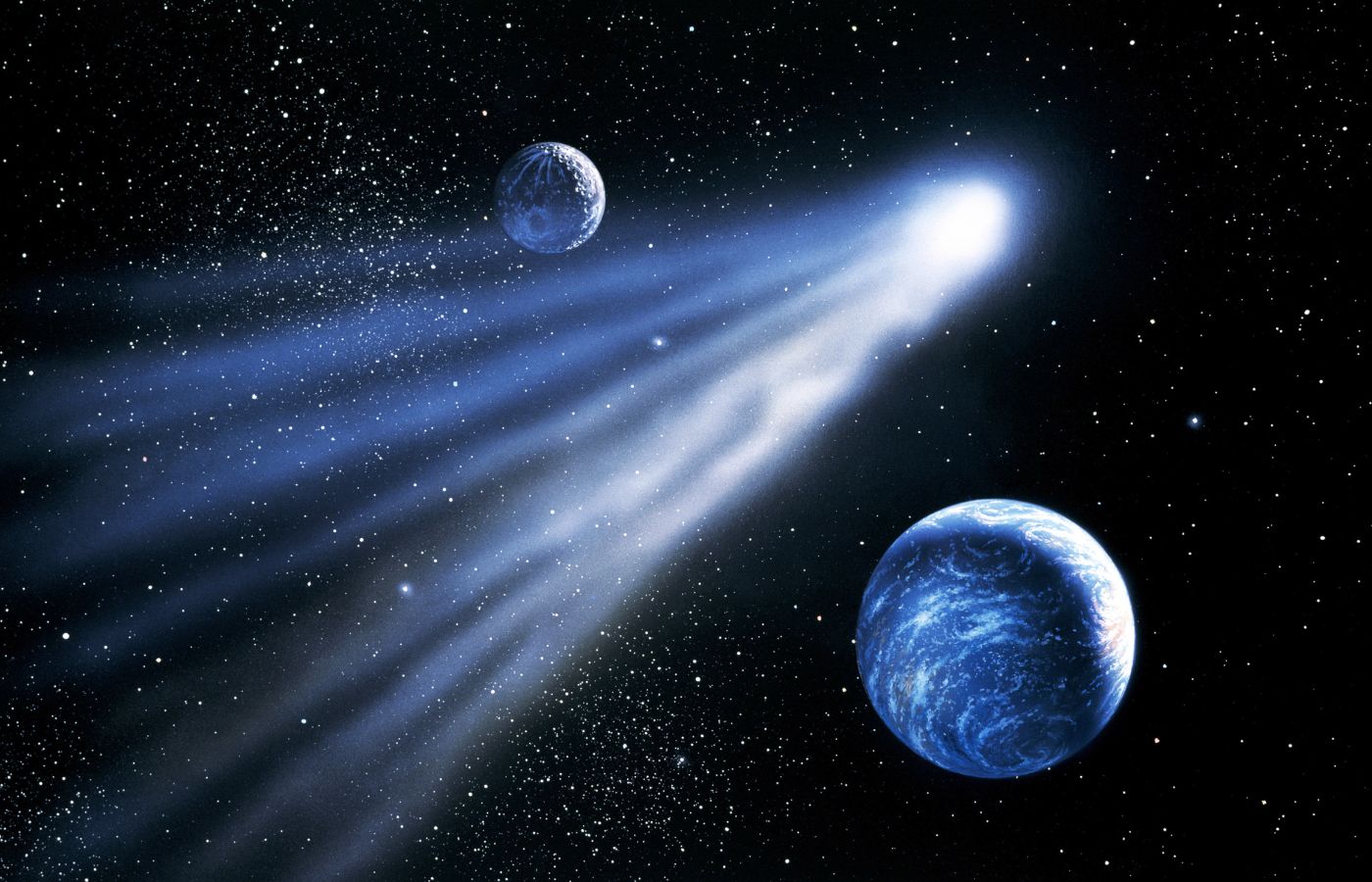
Comets have been sparking curiosity for thousands of years. With their glowing heads and sweeping tails, these icy travelers bring a little extra magic to the night sky — and a great opportunity to teach kids about space in a fun, simple way.
Below, you’ll find 25 kid-friendly comet facts, plus tips for spotting a comet and easy explanations parents can use at home or in the classroom.
Want more fun facts? Check out our master resource of fun learning facts for children.
Quick List of Comet Facts
For quick reference, here are the highlights:
- “Comet” comes from a Greek word meaning “long-haired star.”
- Comets are made of ice, dust, and frozen gases.
- The center of a comet is an icy nucleus.
- Comets glow because they melt when they get close to the Sun.
- The bright “head” is called the coma.
- Not every bright sky object is a comet — some are meteors or asteroids.
- Most comets come from the Kuiper Belt or the Oort Cloud.
- Space missions have captured close-up photos of comets.
- NASA has real comet dust samples on Earth.
- A comet’s tail can stretch for millions of miles.
- Comets are grouped by how long their orbit takes.
- Halley’s Comet returns every 75–79 years.
- Long-period comets can appear only every 200–1,000 years.
- Comets help scientists study the early solar system.
- Halley’s Comet appears in ancient artwork and manuscripts.
- Hale-Bopp stayed visible for 18 months.
Scroll down for the full list with explanations kids will understand.
25 Fascinating Comet Facts for Kids
1. The word “comet” means “long-haired star.”
Ancient Greek astronomers nicknamed them “long-haired stars” because their glowing tails looked like floating hair in the sky.
2. Comets are giant icy snowballs in space.
They’re made of frozen water, dust, and frozen gases like methane and carbon dioxide.
3. The solid center of a comet is called the nucleus.
It’s made of ice and rock and can be several kilometers wide — the size of a small town.
4. Comets glow because they melt near the Sun.
As the Sun warms them up, the ice turns into gas and creates a bright, fuzzy cloud around the nucleus.
5. That glowing cloud is called the coma.
The coma forms the bright “head” of the comet that we can see from Earth.
6. Comets grow long, beautiful tails.
The dust and gas blowing off the nucleus stretch out behind the comet, forming a tail that always points away from the Sun.
7. Not all bright objects in the sky are comets.
Meteors (shooting stars) and asteroids are mostly rocky. Comets are icy — that’s a big difference.
8. Most comets come from the Kuiper Belt.
This icy region sits past Neptune and contains thousands of frozen objects.
Here’s our kid-friendly Neptune facts guide if you want to learn more!
9. Some comets come from the Oort Cloud.
The Oort Cloud is even farther away — a huge shell of icy objects surrounding the solar system.
10. Comets travel very long paths through space.
Their orbits take them from the outer edges of the solar system all the way toward the Sun and back again.
11. Scientists have flown spacecraft right past comets.
Several missions have captured close-up photos, measured dust, and even studied the shape of the nucleus.
12. The closest comet photos ever taken were of Halley’s Comet.
In 1986, the European Space Agency’s Giotto Mission flew close enough to capture detailed images of its icy surface and gas jets.
13. NASA brought home real comet dust.
The Stardust Mission collected particles from Comet Wild-2 and safely returned them to Earth for scientists to study.
14. A comet’s tail can stretch for millions of miles.
The Sun heats the comet’s ice, making gas and dust stream out behind it in an enormous glowing trail.
15. Comets are sorted by how long their orbit takes.
Some return often, while others won’t be seen again for centuries.
16. Short-period comets return in under 200 years.
They orbit the Sun more frequently and can sometimes be seen again within a lifetime.
17. Halley’s Comet returns every 75–79 years.
It’s one of the most famous comets ever because people can see it with the naked eye.
18. Long-period comets take hundreds or even thousands of years to return.
These comets come from far in the Oort Cloud and appear only rarely.
19. Comets act like time capsules from the early solar system.
Their icy material comes from the earliest days of the Sun and planets, so studying them helps scientists understand how the solar system formed.
20. Some scientists think comets helped bring water to Earth.
Their icy material may have delivered water and organic molecules in the planet’s early days.
21. Halley’s Comet appears in ancient artwork around the world.
People have recorded its visits for centuries in paintings, manuscripts, and historical accounts.
22. Edmond Halley correctly predicted the comet’s return in 1758.
That’s why it now carries his name.
23. Hale-Bopp was visible for 18 months.
When it passed by in 1997, it shone brightly for a year and a half, making it one of the most widely viewed comets in history.
24. Comets never stop changing.
Each time a comet gets close to the Sun, it loses a little more ice and gas.
25. Seeing a comet is a rare and unforgettable experience.
Some comets are visible only once in thousands of years, making each sighting special.

Bonus Comet Facts for Curious Kids
1. Comets have TWO tails — not one.
One is a dust tail (white), and one is an ion tail (bluish).
They often point in slightly different directions.
2. Comet tails can actually point ahead of the comet.
Because tails always point away from the Sun, a comet moving outward can appear to have its tail in front of it.
3. Comets can “break apart” near the Sun.
Heat and gravity can cause pieces to fracture or crumble.
4. Some comets are older than the planets.
Their materials formed before Earth was even a planet!
5. You can’t stand on most comets.
Their gravity is extremely weak — you would weigh only ounces.
6. Comets don’t sparkle — the Sun lights them up.
The light is actually sunlight reflecting off dust and glowing gases.
7. Some comets visit the inner solar system on a schedule.
Halley’s is the most famous, but others (like Comet Encke) return regularly too.
8. Comets travel incredibly fast — up to 157,000 mph.
How fast does a car or bus go in comparison?
9. Earth has passed through comet dust before.
Meteor showers often come from old comet debris.
10. A comet discovered in 2020 had a tail 10 times the width of Jupiter.
That’s enormous!
Did you know? NASA has studied comets up close, and if your kids love space missions, they’ll be amazed by what’s on display at Kennedy Space Center. Here’s our honest review of Kennedy Space Center.

How Kids Can Watch for Comets
Comets can’t be seen every night, but when they do come into view, they’re worth staying up for. Here’s how to make comet-watching easier and more fun for families:
1. Follow an astronomy calendar.
Websites and apps often list upcoming comet appearances and other sky events.
2. Look for a clear sky with low light pollution.
Rural areas, nature preserves, and wide-open fields offer the best views.
3. Bring viewing equipment if you can.
Comets are often visible to the naked eye, but if your family is looking for a simple beginner telescope, this one is easy for kids to use and works well for spotting bright comets. Binoculars can also make the tail and coma easier to see.
4. Give your eyes time to adjust.
It takes about 20 minutes in the dark to see details in the night sky.
5. Stay safe and comfortable.
Bring warm clothing, snacks, water, and a red-tinted flashlight so you can see without losing night vision.
Comet Facts: Key Takeaways
Comets have icy cores, glowing heads, and long, beautiful tails that can stretch for millions of miles. They carry clues about the early days of the solar system and remind us how much there is still to discover in the universe.
Whether your kids are studying astronomy or simply love looking up at the sky, comets are an exciting way to learn about space together.
Optional Learning Resource
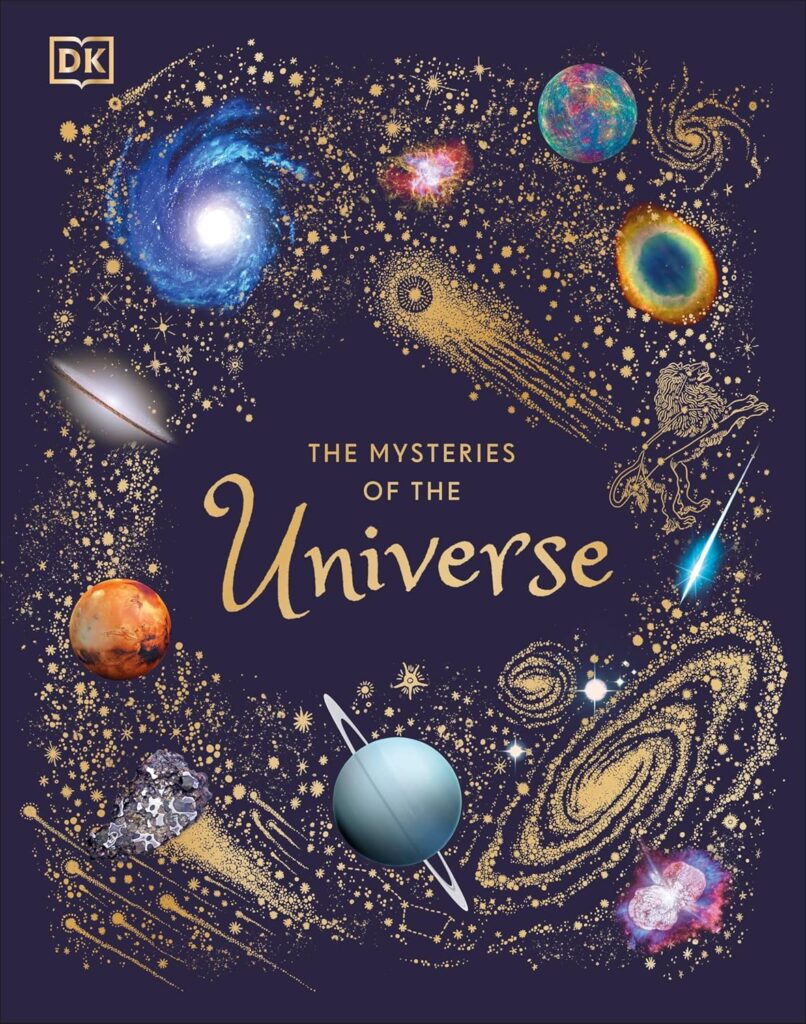
The Mysteries of the Universe (Will Gater)
If your kids love learning about comets and other space topics, “The Mysteries of the Universe” will captivate them with the wonders of the universe.
Related Posts:
• 50 Surprising Facts About Mars For Kids
Quick, easy planet facts for young space explorers.
• 50 Surprising Facts About Neptune For Kids
A kid-friendly look at the coldest and windiest planet.
• 50 Mind-Blowing Hurricane Facts For Kids
Weather science explained simply, with lots of fun details.
• 25 Mind-Blowing Rainbow Facts For Kids
A gentle, colorful introduction to light, color, and weather.

Calie Herbst, Editor-in-Chief of Milwaukee With Kids, has spent over a decade combining her experiences as a parent of three to create a hub for Milwaukee’s family adventures.
Her decade-long teaching career in Milwaukee Public Schools and academic background, including a Master’s in Teaching from Marquette University and dual B.A.s in Sociology and Spanish from the University of Wisconsin – Madison, fuel her passion for inclusive and engaging family content.
Calie is also a recognized voice in local media, contributing to WISN Channel 12 News, WTMJ Wisconsin Morning News, Fox 6’s Real Milwaukee, and B93.3.
Discover more about Calie’s journey and editorial approach on her About Page and Editorial Policy Page.